
How to Clean and Store 925 Sterling Silver Jewelry
The safest way to clean 925 sterling silver jewelry starts with a question: what else is in the piece? Plain, unplated silver, plated silver, and silver set with gemstones do not necessarily tolerate the same treatment. A cleaning method that brightens one bracelet can damage the finish or stone in another.
For the U.S. silver-content standard, see the FTC jewelry guides at Cornell Law School.
Use the gentlest suitable method, stop if you are unsure about the material, and follow the maker's instructions for the complete jewel. If the basic metal terminology is unfamiliar, the guide to 925 sterling silver explains what the mark means. This article focuses on cleaning decisions, storage, and signs that need a jeweler rather than another home remedy.
A simple care routine
- Identify the metal finish and all stones before using any cleaner.
- Inspect for loose stones, damaged links, or a weak clasp.
- Start with a clean, soft, untreated cloth.
- Use water or a polishing product only when suitable for the whole piece.
- Dry thoroughly and store each piece separately.
Tell tarnish apart from damage

Tarnish is a surface reaction that can change silver's color. Sulfur-containing compounds in the environment are a common cause. Moisture, residue, and storage conditions can influence how quickly the change becomes noticeable. Tarnish is not, by itself, proof that a silver item is fake.
But not every dark or dull area is tarnish. Some jewelry has intentionally darkened details. Plating can wear, and scratches can scatter light in a way that makes the finish look cloudy. Residue from lotion can also sit around settings and chains. Cleaning harder will not solve every one of these problems.
Compare the piece with its original description and photographs. If dark recesses are part of the design, do not try to polish them into a uniform bright finish. If the color has worn unevenly at contact points, ask the seller whether the piece is plated before using a treated polishing cloth.
Inspect before you clean
Work over a clean towel in good light. Check clasps, jump rings, earring backs, and the areas where a chain connects to a pendant. Look for a prong that has lifted or a stone that appears out of position. Don't push or twist a stone to test it.
If something is loose, postpone cleaning and stop wearing the jewelry. A small problem can become a missing stone or lost bracelet. Keep the item in a separate container, and describe what you noticed to a qualified jeweler or the seller.
Gather a soft lint-free cloth and the care instructions before starting. A microfiber cloth should be clean, not the one used to wipe a dusty countertop. Trapped grit can scratch a polished surface. Avoid tissues and paper towels for rubbing, especially on delicate finishes.
Method one: a gentle dry wipe
For fingerprints and light surface residue, an untreated soft cloth is the safest starting point. Hold the piece by its stronger sections and wipe lightly. Support a fine chain along its length rather than pulling it tight between your hands.
Do not force the cloth beneath prongs or into small openings. A thread caught in a setting can tug at the metal. For a delicate pendant, work around the setting in short movements. The aim is to remove surface residue, not to reshape the finish.
An untreated cloth is not the same as a silver polishing cloth. Treated cloths contain cleaning or polishing compounds and can be inappropriate for plating, intentional oxidation, or some gemstones. Read the cloth manufacturer's directions and the jewelry's instructions before using one.
Method two: mild soap, only for suitable pieces

If the maker confirms that the complete item can be cleaned with water, use a small amount of mild soap in lukewarm water. Avoid hot water, harsh detergents, bleach, and fragranced household cleaners. Use a bowl away from an open drain so a small part cannot disappear into the sink.
For confirmed suitable plain silver, a brief gentle wash can remove greasy residue that a dry cloth leaves behind. Avoid extended soaking as a default, particularly for hollow, assembled, or stone-set pieces. A soft brush should be used only if the construction and care instructions permit it, and without pressure against prongs.
Rinse with clean water using the same closed-container precaution. Pat dry with a lint-free cloth, then allow moisture in links and settings to evaporate fully before storage. Do not use a hair dryer, oven, or other heat source to speed up the process.
When to skip water
Skip this method when you don't know the gemstone, treatment, adhesive, finish, or construction. Pearl, opal, emerald, and assembled jewelry each introduce questions that a generic silver-cleaning recipe doesn't answer. If a piece includes several materials, the most sensitive component sets the limits.
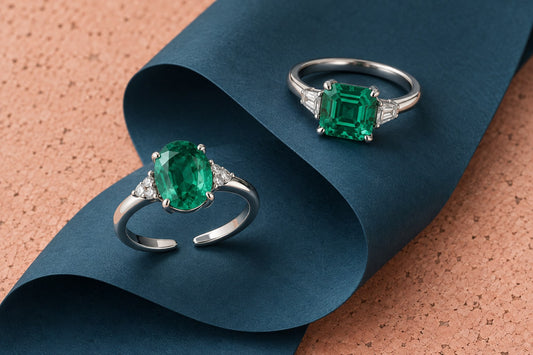
For example, a silver setting does not make ultrasonic cleaning appropriate for an emerald. Our lab-created emerald guide explains why gemstone identity and treatment disclosure matter. Laboratory origin alone is not permission to use heat, chemicals, or aggressive cleaning equipment.
What not to use as a routine shortcut
Toothpaste, abrasive powders, and vigorous scrubbing can scratch metal or alter a finish. Baking-soda pastes are not a universally safe alternative just because they use familiar kitchen ingredients. Foil-and-hot-water methods also disregard plating, deliberate patina, gemstones, and construction details.
Chemical silver dips require similar caution. A product sold for silver does not necessarily suit every silver jewel. Don't immerse a mixed-material piece unless both the cleaner and jewelry instructions support that use. Never mix household chemicals or improvise concentrations.
Ultrasonic and steam cleaners are not an upgrade to every care routine. Vibration, heat, existing damage, and gemstone treatments can change the risk. Professional assessment is the better choice when an item needs more than gentle cleaning or its material history is unclear.
Store necklaces without knots
Let a necklace dry completely, close the clasp, and place it separately from other chains. A dedicated compartment or soft pouch can reduce rubbing. Avoid bundling several chains in one small pocket, where pendants and clasps can catch each other.
Lay delicate chains in a relaxed curve rather than tightly wrapping them around the pendant. Heavier pendants shouldn't hang from a fine chain in a way that keeps it under tension during travel. If a knot develops, don't yank at it. Work gently on a flat surface or ask a jeweler for help if it won't release.
When choosing a new piece, compare fastening and chain details in the necklace collection. Storage becomes easier when you know which components are removable and which are part of the design. Do not dismantle jewelry simply to make it fit a box.
Give earrings and bracelets their own space
Keep earring pairs together without letting the fronts rub against each other. Store backs securely so they aren't lost in a larger compartment. Avoid pressing posts into hard surfaces or bending them to fit a shallow case. A small divided box can be more useful than a decorative dish.
For stud earrings, check the backs and posts before each wear. If a fastening has become loose, cleaning won't restore its grip. Stop relying on it until the issue is addressed. Don't assume a replacement back is compatible solely because it looks similar.
Bracelets should lie without tight bends or forced curves. A flexible stone-set bracelet is not meant to be folded sharply at one joint. Keep its clasp from rubbing against neighboring jewelry, and avoid stacking heavy items on top of it in a travel case.
Choose a dry storage location

A bathroom counter is convenient but exposes jewelry to humidity and personal-care products. Choose a dry place away from direct heat and sunlight. Store pieces only after they are clean and dry; enclosing damp jewelry can trap moisture rather than protect it.
An anti-tarnish pouch or strip can be useful when used according to its manufacturer's directions. It is not permanent protection and doesn't replace gentle handling. Keep any storage accessories away from children and pets, and replace them when the instructions call for it.
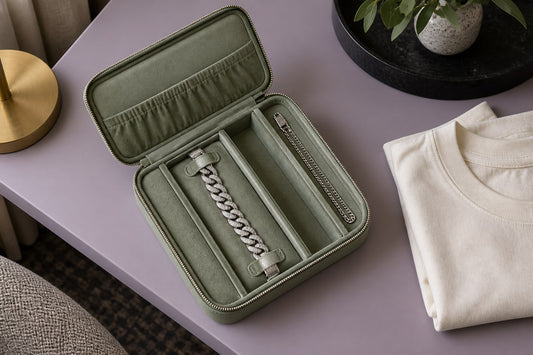
For travel, pack pieces individually and carry them where you can keep track of them. Avoid placing jewelry loose in a toiletries bag. If you remove a ring to wash your hands, use a designated container instead of a tissue that might be thrown away.
Daily habits that reduce cleanup
Put jewelry on after lotion, fragrance, sunscreen, and hair products have settled. Remove it before swimming, cleaning, or tasks involving repeated friction. These habits reduce exposure; they do not guarantee a tarnish-free surface or eliminate the need for maintenance.
After wearing, a light wipe can remove residue before it accumulates. Don't turn that into a daily abrasive polishing session. Frequent aggressive polishing can change a finish, especially on plated or detailed pieces. Clean according to condition and the material instructions, not an arbitrary calendar.
Photograph a concern before cleaning if you plan to contact the seller. A clear image of the location and a short description of recent exposure are more helpful than simply saying the jewelry “changed color.” Stop using a piece if it irritates your skin, and seek appropriate medical advice for persistent symptoms.
Frequently asked questions
Does tarnish mean sterling silver is fake?
No. Sterling silver can tarnish naturally. However, not every color change is tarnish; plating wear, residue, and intentional darkened details need different handling.
Can I use a silver polishing cloth on every silver piece?
No. Treated polishing cloths can be unsuitable for plating, intentional oxidation, and some stone-set designs. Check the instructions and start with an untreated soft cloth when uncertain.
Should I shower in sterling silver jewelry?
Removing it first reduces contact with soaps, moisture, and other products. It also avoids treating the shower as a cleaning method for stones or finishes that need special care.
What should I do if a stone or clasp is loose?
Stop wearing the piece, store it separately, and have it checked by a qualified jeweler or the seller. Do not bend prongs or tighten delicate components at home.
Clean less aggressively, store more carefully
A reliable silver-care routine is simple: identify the whole piece, inspect it, use the least aggressive suitable method, and put it away fully dry. Better storage and a few everyday habits often prevent the need for harsh treatment. When you can't identify a finish or gemstone, asking first is less costly than experimenting.
Editorial responsibility: Lumingem Editorial Team. Product-specific questions: shopify@lumingem.com.
Tags:
Previous
How to Choose an Engagement Ring Setting for Everyday Wear
Next
Wedding Jewelry Gifts: A Thoughtful Guide for the Bride, Bridesmaids, and Mothers
Related articles
How to Pack Hip-Hop Jewelry for a Weekend Away
Sep 14 2026