
Wedding Jewelry Gifts: A Thoughtful Guide for the Bride, Bridesmaids, and Mothers
A good wedding jewelry gift feels like it belongs to the person receiving it. It can coordinate with the celebration, but it shouldn't require the recipient to become a different dresser for the day. Begin with what she already wears, then decide how the gift will fit the ceremony, photographs, and life afterward.
For the U.S. silver-content standard, see the FTC jewelry guides at Cornell Law School.
Simple doesn't have to mean impersonal. A carefully chosen pair of earrings, a green gemstone pendant, or a bracelet in a familiar metal color can carry more meaning than a large matching set. The useful questions are practical: Are her ears pierced? What length necklace does she wear? Does she enjoy visible color? Would she rather choose the piece herself?
Decide whether this is a gift or part of the dress code
If jewelry is required for a coordinated wedding-party look, communicate that clearly and consider supplying it separately from any personal thank-you gift. A recipient should not have to guess whether she is free to wear something else. A present feels more generous when its use isn't a hidden obligation.
For an optional gift, make the freedom explicit: “I thought you'd enjoy this, whether you wear it at the wedding or afterward.” That short note removes pressure, especially for someone who has already chosen sentimental jewelry or needs a different fastening or material.
- Ask about piercings and material sensitivities before selecting earrings.
- Coordinate color or scale rather than forcing identical designs.
- Check real dimensions, fastenings, and delivery timing.
- Keep personalization separate from assumptions about return eligibility.
- Give the recipient room to choose what feels comfortable.
For the bride: begin with the pieces already chosen

Before buying jewelry for the bride, ask whether she plans to wear a family piece, a veil, a hair accessory, or an existing necklace. Those decisions can occupy the same visual space as your gift. A surprise pendant may be lovely but impractical if the dress has a detailed high neckline.
Look at the dress and jewelry together rather than applying a rigid rule about matching. Lace, beading, sleeves, neckline depth, and hairstyle all influence what feels balanced. A plain gown can support a strong focal piece, while an ornate gown might call for quieter jewelry. Personal preference still comes first.
Earrings with veils and hair accessories
Studs can keep the area around the face uncluttered. Longer earrings add movement, but their length and shape need to work with the veil and hairstyle. Consider whether an earring might catch in lace or hair, especially during dressing and hugs.
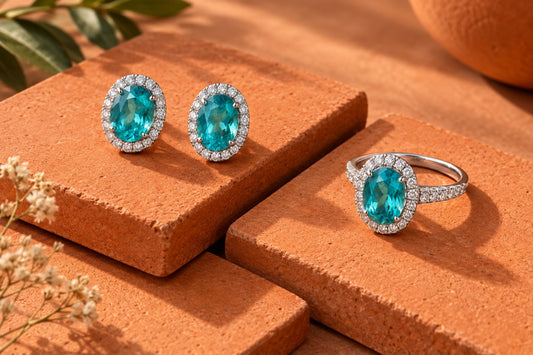
The stud earring collection offers a starting point for comparing proportions. Check the individual product's stone, metal, and fastening rather than assuming every pair in a category has the same materials. Small differences in depth and weight can matter during a long day.
A necklace for an open neckline
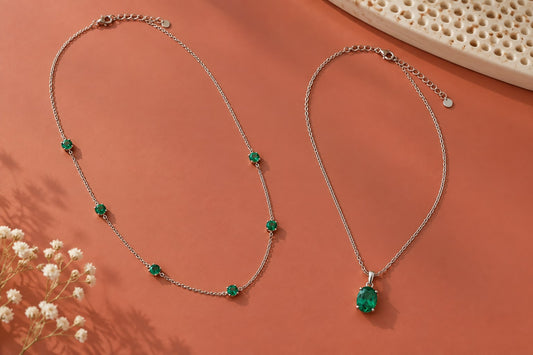
A pendant can create a clear focal point, but chain length needs to be considered against the actual dress. A piece that lands on the neckline's edge can look less deliberate than one that sits clearly above or below it. Use a necklace the bride already owns to test placement before ordering.
When reviewing necklace options, check whether the chain is included and whether adjustment is available. Don't infer length from a model photograph alone. Body proportions and dress construction change where the same chain falls.
For bridesmaids: coordinated, not interchangeable
A wedding party can look cohesive without everyone wearing the same jewelry. Repeating one element, such as a metal color, gemstone color, or modest scale, leaves room for different necklines and preferences. This can be especially useful when bridesmaids choose their own dresses within a palette.
One person might prefer studs, another a pendant, and another a bracelet. Similar visual weight can tie those choices together. If you choose several designs, keep the gift budget reasonably balanced rather than giving one person a visibly more elaborate present without explanation.
Use a short, private preference check
Ask each recipient whether she wears earrings, which metal color she reaches for, and whether there are materials she avoids. That is usually enough to prevent the most obvious mismatch. Don't ask someone to disclose medical details to justify a preference.
If exact coordination is important, offer two or three approved choices. This is easier to manage than an open-ended shopping assignment, while still allowing a person with no pierced ears to choose a necklace. A gift card or a non-jewelry thank-you can be the most considerate option when jewelry simply isn't her thing.
Think beyond the wedding photographs
A restrained piece can work with a work shirt, weekend sweater, or dinner outfit after the event. Avoid choosing solely around a highly specific wedding motif unless you know the recipient enjoys it. Meaning can come from the note and occasion rather than a permanent inscription.
For mothers and mother figures: follow their style
Don't default to a conservative design because of someone's role or age. A mother who enjoys bold color may appreciate a more distinctive piece than the bride. Another may prefer a delicate chain she can wear every day. Look at her existing jewelry instead of treating “mother of the bride” as a style category.
A bracelet can be a thoughtful option for someone who rarely changes necklaces or earrings. Browse bracelet styles with her normal clothing and habits in mind. Consider whether sleeves will cover the piece, whether she can operate the clasp comfortably, and whether the fit is adjustable.
If the gift marks a specific relationship, keep the message personal and direct. Thank her for something real: hosting a family gathering, helping with the dress, or making time during a stressful month. A detailed sentence carries more weight than a generic statement about how much all mothers mean.
Adding gemstone color without forcing a theme

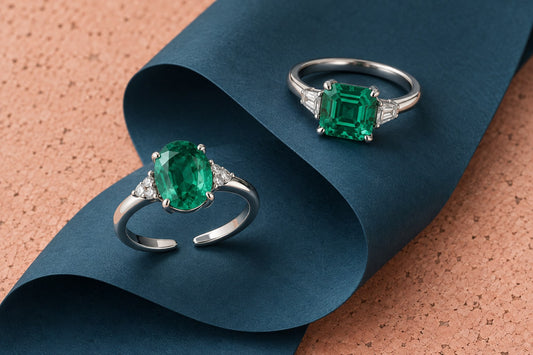
Colored gemstones can connect a gift to a wedding palette, a favorite color, or an existing wardrobe. They don't need an invented symbolic meaning. If green is already a favorite, an emerald-colored focal point can be an easy choice. If pink or blue is rarely worn, the wedding palette alone may not justify it.
Use the material name accurately. Lab-created emerald, laboratory-grown sapphire, and a different stone selected for its color are not interchangeable descriptions. The lab-created emerald guide explains how to separate material, cut, and color language before you buy.
A meaningful color can be subtle. Small green studs can repeat a floral accent without creating a full matching set. A colored pendant can also be given for later wear if the bride's ceremony jewelry is already settled. A wedding gift does not lose its meaning because it first appears at the rehearsal dinner or on an ordinary day afterward.
Fit matters even when there is no ring size
Earrings and necklaces avoid finger sizing, but they are not automatically universal gifts. Earrings require the right fastening for the recipient's ears. Necklaces need a suitable length. Bracelets require enough room for comfort without sliding excessively over the hand.
If possible, measure a piece the recipient already wears with permission. For a necklace, record its laid-flat length and pendant dimensions. For a bracelet, compare usable length and clasp design. Do not assume an adjustable design covers every wrist or neckline.
For someone with material sensitivities, get specific composition information. A precious-metal label or the word “hypoallergenic” is not a personal guarantee. If the seller cannot answer the relevant question, choose a different gift rather than asking the recipient to take the risk on the wedding day.
Budget for the complete gift
Set a total budget before narrowing the design. Include any chain sold separately, gift packaging, personalization, shipping, and applicable taxes. A lower listed price can become a different comparison once those details are included.
For several bridesmaids, plan the total number of gifts first. Decide whether the same amount applies to everyone or whether there is a separate gift for a particular role. You don't need to explain prices to recipients, but a clear plan prevents last-minute choices driven by what remains in the budget.
Never assume custom work has ordinary return terms. Read the current policy for the exact purchase and clarify it before engraving or other personalization. A date or initials can make a gift meaningful, but they should be correct and wanted. Proofread the text yourself instead of relying on an order note written in a rush.
Order, inspect, and pack before the busy week

Work backward from the date you need the gifts in hand, not only the ceremony date. You may need them for a rehearsal dinner, travel, or a private family moment. Ask about actual availability and processing time rather than assuming a shipping estimate includes every production step.
Open and inspect each item when it arrives. Match it to the order, check the fastening, and make sure pairs and chains are complete. Keep packaging and order information until any questions are resolved. Do not leave the first inspection until someone is opening the box in wedding photographs.
Label multiple boxes discreetly and keep a simple list of recipients and pieces. Pack each item separately for travel. Put notes in the correct boxes before the final day, and assign one person to keep track of them if the morning will be busy.
Give the gift at a calm moment
A private moment before the ceremony, a rehearsal gathering, or a quiet visit can be more comfortable than a hurried presentation while everyone is getting dressed. Leave time for the recipient to try the piece and ask for help with a fastening without feeling watched.
On the day, jewelry should go on after hair spray, perfume, and makeup. Have a small clean pouch available if someone decides to remove it. The silver care and storage guide is useful for recipients of silver pieces, with the reminder that gemstones and plating can require different handling.
Frequently asked questions
Do all bridesmaids need the same jewelry gift?
No. You can coordinate metal color, gemstone color, or scale while choosing different pieces for individual preferences, piercings, and dress necklines.
What should I buy if I don't know the recipient's size?
A necklace or earrings can avoid finger sizing, but you still need to check necklace length, ear piercings, fastening preferences, and material sensitivities.
Does wedding jewelry have to be worn at the ceremony?
No. Unless it is clearly part of an agreed dress code, let the recipient decide. A gift can be meaningful even when it is worn after the wedding.
Should I personalize every wedding jewelry gift?
Only if the recipient would enjoy it. Confirm spelling and details before ordering, and read the current custom-order terms. A personal handwritten note can add meaning without altering the jewelry.
A keepsake that feels personal
The most thoughtful wedding jewelry gift respects the recipient's taste, comfort, and choices. Start with the person, coordinate only what needs coordinating, and take care of fit and timing before the busy week. The result should feel like a thank-you she can wear, not another item on the wedding checklist.
Editorial responsibility: Lumingem Editorial Team. Product-specific questions: shopify@lumingem.com.
Tags:
Previous
How to Clean and Store 925 Sterling Silver Jewelry
Next
How to Choose a Lab-Grown Ruby Bracelet: Color, Fit, and Gift Occasions
Related articles
How to Pack Hip-Hop Jewelry for a Weekend Away
Sep 14 2026