
How to Read a Gemstone Certificate: A Practical Guide for Jewelry Buyers
A gemstone document is useful only when you understand what it identifies, who issued it, and how it connects to the jewelry in front of you. An attractive card with the word “certificate” isn't enough. Neither is a report number copied into a product description.
For the distinction between material identity and origin, GIA explains synthetic counterparts and imitations. Its sapphire reference identifies corundum and its color range. Neither reference certifies an individual jewel or its supply chain.
Read the paperwork in three passes: identify the document, match it to the stone, and check what it does not say. This approach works whether you're considering a loose colored gem or a finished piece from a jewelry collection. It also helps you ask a precise question when a listing and its paperwork disagree.
Identify the document before interpreting the details
A laboratory identification report, a seller's authenticity card, and a valuation document serve different purposes. Start with the issuer and the document's exact title. Then read the stated scope. Don't assume that every piece of paperwork examines the same characteristics or applies the same grading system.
A seller's card can record what was sold. A laboratory report can provide findings from an examination, within the laboratory's stated limits. An appraisal addresses value for a stated purpose and date. None of those descriptions automatically makes one document suitable for every purchase.
Ask who performed the examination and whether the report refers to a loose stone or finished jewelry. For a ring, the center stone's report may say nothing about the metal, the small surrounding stones, or the workmanship of the setting. That distinction matters even when every word on the document is accurate.

Match the report to the item being offered
The document needs a clear connection to the actual purchase. Compare the report number, stone description, shape, measurements, and photographs or diagrams where provided. Read units carefully. A measurement in millimeters is not a carat weight, and a total jewelry weight isn't the weight of the center stone.
Mounted stones can limit what an examiner can observe or measure. Look for any wording that explains those limitations. If a listing gives an exact weight but the report says the weight was estimated in the setting, ask how the listing's number was obtained.
For earrings, check whether paperwork covers one stone, both stones, a sample, or the entire pair. For a bracelet containing many gems, don't assume a document showing one gemstone proves that every stone was individually examined. Ask for the scope in writing.
Use the issuing laboratory's own verification route
If the issuer offers an online report lookup, navigate to its official website independently and enter the report number there. Compare the returned information with the supplied copy. Avoid treating a QR code as proof by itself; a code is simply a way to open an address.
An online match supports that a report with those details exists. It does not, on its own, prove that the stone now offered is the same stone, that it hasn't been altered, or that the seller is authorized by the laboratory. Keep those questions separate.
If an older report isn't available online, contact the issuer through independently located contact details. Don't conclude that an unavailable lookup automatically proves fraud. Equally, don't dismiss a mismatch because the seller says the website is slow. Pause until the discrepancy is explained.
Read gemstone identity and origin as separate fields
Gemstone identity answers what the material is. Natural or laboratory-grown wording addresses how it formed. Geographic origin, when a report provides an opinion about it, is another question. The word “origin” can be used loosely in marketing, so read the exact sentence rather than relying on a headline.
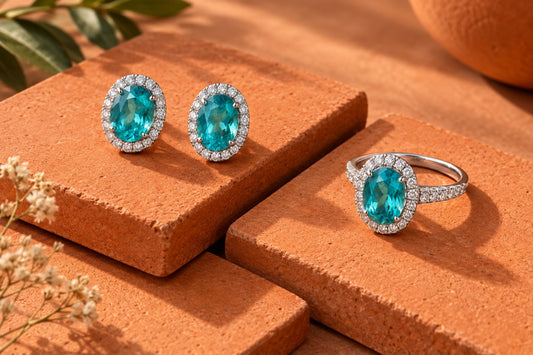
A lab-grown emerald and an emerald-colored imitation are not interchangeable descriptions. Likewise, a turquoise-blue appearance does not by itself establish that a stone is Paraiba tourmaline. A report should be read for the material it names, not the name you'd like its color to imply.
Compare that language with the seller's page and invoice. If the product says lab-created sapphire, the paperwork should not leave you guessing whether it describes sapphire or merely a blue stone. The colored gemstone buying guide provides a broader framework for checking the jewelry description alongside the document.
Treat treatment notes as useful buying information
Read the comments section even if the front of the document looks straightforward. Treatment observations, testing limits, and explanatory notes can appear there rather than beside the gemstone name. Those details can influence the questions you ask about maintenance, disclosure, and price.
Don't translate an unfamiliar phrase into “untreated” without checking. “No indication observed” is an observation stated within an examination's scope; it isn't permission to invent a broader guarantee. If treatment information is absent, ask whether the document type includes that assessment.
Ask the seller for care instructions that fit the material and any disclosed treatment. Paperwork that identifies the stone doesn't necessarily provide a cleaning procedure. Until the relevant details are clear, don't use aggressive cleaners or equipment based on a general internet tip.

Don't import diamond grading assumptions into colored gems
A familiar combination of letters and numbers can look authoritative, but you still need its definition. If a seller uses labels such as AAA, ask what they measure and whose system they follow. A house grade can help explain one seller's categories without being a universal scale across the market.
For colored stones, look closely at the actual descriptions and photographs. A document might identify color without making the aesthetic judgment you care about: whether the shade looks appealing to you in the setting. A technical description and a personal preference aren't competing answers. They're answers to different questions.
Don't expect a document to tell you whether an earring is proportionate to your ear or a pendant suits your neckline. The emerald earring comparison guide addresses those visual decisions. Paperwork supports material understanding; it doesn't replace evaluating the design.
A report is not a promise about resale or future wear
Identification is not a guaranteed selling price. A valuation prepared for one purpose is not necessarily the amount a buyer would offer later. Read the purpose, date, assumptions, and issuer of a valuation before comparing its figure with the purchase price.
A laboratory document also doesn't guarantee that a setting will never loosen or a gemstone will never chip. The construction and current condition of the piece still need attention. Look at the prongs, clasp, chain, hinges, and finish where relevant, and ask about any areas that photographs don't show.
A low-priced piece without an individual report and an expensive stone with a detailed report shouldn't be judged by the same paperwork expectation. Decide what information is proportionate to the purchase and what unresolved uncertainty you are willing to accept. A document is helpful when it resolves a real question.
Use a short discrepancy checklist
If something doesn't match, describe the discrepancy rather than making an accusation. “The listing says oval, but the document says round” gives the seller a specific issue to resolve. A complete, consistent replacement copy is more useful than a vague reassurance.
- Save the listing and the supplied document for your own order records.
- Highlight the exact conflicting field, number, or description.
- Ask whether the document is individual to the piece or a sample.
- Request the correct document or a written explanation before purchasing.
- Contact the issuer if the meaning or authenticity of its document remains unclear.
Be particularly careful when a listing shows a sample certificate. A sample can explain the format, but it isn't the report for the item you'll receive. Ask what documentation is included with your order and whether the pictured number belongs to that piece.
Keep a useful record after delivery
Store the invoice, product description, report, and order correspondence together. Keep a digital copy as well as any original paper. Photograph the jewelry as received, including the fastening and any identifying marks you can see without manipulating the setting.
Share report copies thoughtfully. A public listing with a visible report number can be copied by someone else, so retain the full record privately and consider what a public photograph actually needs to show. If you later sell or insure the piece, ask the relevant professional what current documentation is required.

Questions worth sending before checkout
A concise message can resolve several uncertainties at once: “Does the pictured report belong to the exact stone in this item? What does it cover, and will the original or a copy be included? Please also confirm the metal, accent stones, and any care precautions.” Adjust the questions to the listing rather than sending a generic demand for every possible test.
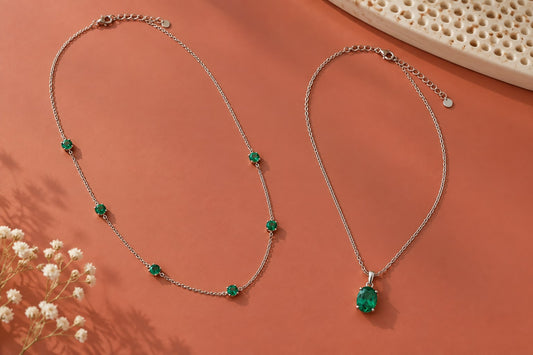
When browsing Lumingem's lab-grown emerald jewelry, use the current product description as the starting point and ask about documentation for the specific item. This article does not state that every product includes an independent laboratory report.
Frequently asked questions
Is a gemstone certificate the same as an appraisal?
No. Read the issuer and stated scope. An identification report concerns examined characteristics, while an appraisal addresses value for a particular purpose and date. A seller's authenticity card is a different document again.
Does an online report match prove the jewelry is genuine?
It supports that a report with those details exists. You still need to connect that report to the actual stone and check the seller's description, the item, and any examination limits.
Should every piece of gemstone jewelry have its own report?
Not necessarily. Documentation needs depend on the material, value, claims, and uncertainty involved. Ask what is included and decide whether independent examination is appropriate for your purchase.
What if the certificate and product page disagree?
Pause the purchase and ask about the exact conflicting field. Request corrected documentation or a clear written explanation. Contact the issuer independently if questions about its report remain unresolved.
Use paperwork to reduce uncertainty
The strongest buying decision combines a clearly described item, relevant documentation, and an understandable explanation of any limits. Read the issuer, match the identifying details, check the comments, and separate identification from value or durability promises. A report should make the purchase easier to understand, not give you another reason to guess.
Editorial responsibility: Lumingem Editorial Team. Product-specific questions: shopify@lumingem.com.
Tags:
Previous
How to Choose Lab-Grown Emerald Earrings: Studs, Drops, Size and Setting
Next
Anniversary Jewelry Gifts: How to Choose a Piece They Will Truly Wear
Related articles
How to Pack Hip-Hop Jewelry for a Weekend Away
Sep 14 2026