
Lab-Grown Blue Sapphire Earrings Buying Guide: Studs vs. Drops, Size, Setting and Metal
Blue sapphire earrings are one of the most useful ways to add color to a jewelry wardrobe. A well-chosen pair can look composed with denim and a white shirt, then feel polished enough for dinner or a formal invitation. This guide focuses on the decisions that change how earrings look and wear: silhouette, apparent size, setting, metal, and occasion.
Start with the way you want to wear them
Studs are the most versatile option. They sit close to the ear, work with collars and glasses, and make color feel intentional rather than costume-like. Drops create movement and become more visible from conversation distance. Hoops with sapphire details sit between the two: familiar, easy, and a little more playful.

Studs versus drops: the practical comparison
When studs are the better buy
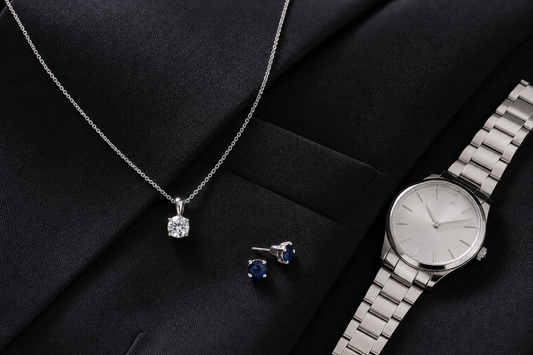
Choose studs when you want a pair for frequent wear, work, travel, or a minimal jewelry wardrobe. A halo can create a larger visual presence without making the center stone feel oversized. The Lumingem royal blue lab-grown sapphire earrings are a useful reference for a classic color-led look.
When drops earn their place
Choose drops when earrings will be part of an outfit rather than an afterthought. They bring length near the jawline and move as you do. Keep the rest of the ear simple, and check that the fastening feels secure before choosing a longer style for an event.

Choose size by visual scale, not only carat language
Face-up size, cut, halo details, and earring placement determine what people see first. On a smaller lobe, a compact oval or round stone can read as substantial. If you usually wear a statement necklace or a busy neckline, a restrained stud prevents the outfit from competing with itself. For a clean capsule wardrobe, a medium blue stone with a bright silver surround is often the most flexible.
Setting and metal: what changes the look
A secure prong or halo setting allows light to reach the stone and keeps the outline crisp. Sterling silver gives royal blue a cool, contemporary contrast. Warm gold plating makes the same blue appear richer and more evening-oriented. Look at the back of the earring as well as the front: good finishing, comfortable posts, and proportionate backs matter if you plan to wear them for hours.

Match the earring to the occasion
For everyday wear, choose a secure stud and let the blue be the only strong color near the face. For weddings and evening dinners, a halo stud or short drop holds its own beside silk, satin, or an open neckline. For a thoughtful gift, stay close to classic proportions unless you know the recipient loves dramatic jewelry. A sapphire piece also pairs naturally with the Lumingem earrings collection when you are comparing shapes.
Care that preserves the finished look
Wipe earrings with a soft, dry cloth after wear and store them apart from harder pieces that could mark the metal. Put earrings on after fragrance and hair products. A gentle rinse and soft brush can be suitable for many pieces, but always follow the product-specific care advice for the setting and metal.
Frequently asked questions
Are blue sapphire studs appropriate for daily wear?
Yes. A compact, secure stud is usually one of the easiest colored-gemstone earring styles to wear often.
Should I choose a halo or a simple solitaire?
Choose a halo for a brighter outline and more visual size; choose a solitaire for a quieter, cleaner look.
Do sapphire earrings work with silver jewelry?
They do. Cool blue and sterling silver create a cohesive, modern combination.
What is a safe gift choice?
A medium-sized stud in a classic shape is more flexible than an extreme length or a very fashion-specific silhouette.
Conclusion
The best blue sapphire earrings are the pair you can picture wearing more than once. Decide whether you need the dependable ease of a stud or the movement of a drop, then judge size and setting in relation to your own wardrobe. For more color guidance, read Pink Sapphire vs. Blue Sapphire Jewelry.
Tags:
Previous
How to Layer Necklaces Without Tangling: A Practical Styling Guide
Next
Moissanite Fire vs. Brilliance: What Is the Difference?