
Moissanite Fire vs. Brilliance: What Is the Difference?
People often describe moissanite as exceptionally sparkly, but “sparkle” is actually several optical effects happening at once. Knowing the difference between brilliance, fire, and scintillation gives you a more useful way to choose a ring, pendant, or tennis piece. It also explains why a stone can look different in a sunny restaurant, a bright office, or a softly lit room.
The three effects behind a lively-looking stone
Brilliance is white-light return
Brilliance is the bright white light that comes back to your eye from a faceted stone. It gives jewelry a crisp, clean presence, especially in daylight or near a window. In a simple solitaire, brilliance often reads first because there are fewer surrounding details competing for attention.
Fire is colored light
Fire is the brief separation of white light into flashes of color. It may appear as small blue, yellow, or rainbow-like sparks when the stone or viewer moves. Moissanite can show noticeable fire, particularly in larger stones and direct point lighting. It is not a defect; it is part of the stone’s personality.

Scintillation is the on-off sparkle
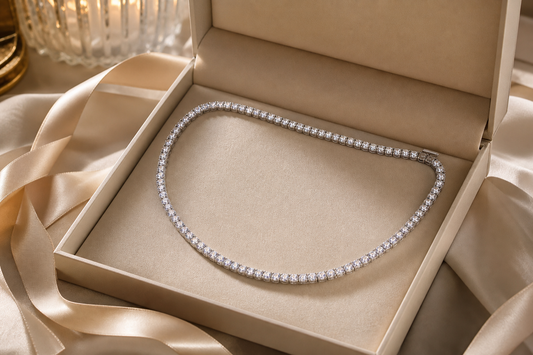
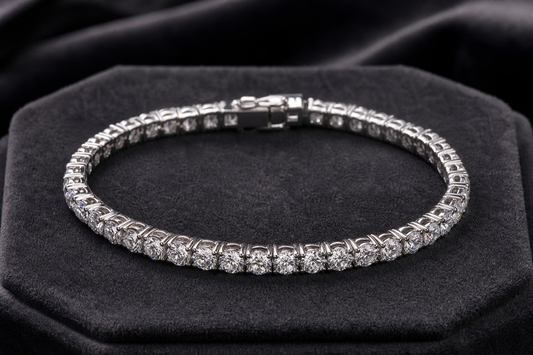
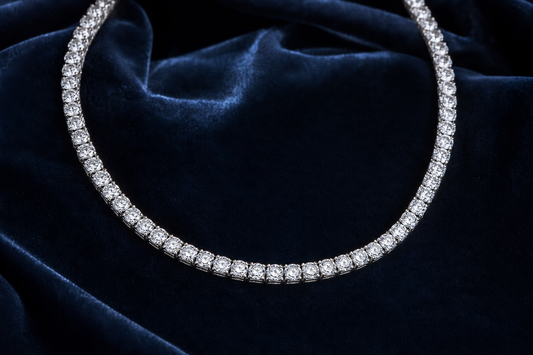
Scintillation is the pattern of bright and dark flashes that changes when a stone moves. It is why a tennis bracelet can look animated while the wrist turns and why earrings may flash as you walk. Cut quality, facet pattern, and cleanliness all influence the effect.
Why moissanite can look different from one setting to another
Shape matters. Round brilliant cuts tend to feel lively and bright; elongated cuts can show broader, more graphic flashes. A halo adds small points of light around the center, while a minimal setting lets you study the center stone directly. Compare an emerald-cut style with a round style in person or in clear product photography, then choose the mood you prefer rather than chasing a single “best” answer.

Lighting changes what you notice
Diffuse daylight tends to emphasize even white brightness. Small direct light sources—restaurant spots, jewelry counters, or evening lamps—can make fire more visible. A dim room may show less overall brightness simply because there is less light to return. This is normal behavior for any faceted gem and not evidence that the piece has changed.
How to choose for your preferred look
If you like a classic, crisp result, start with a round or carefully proportioned elongated center stone and an uncluttered setting. If you enjoy obvious movement and light play, consider a larger center stone, a halo, or a tennis design. The Lumingem emerald-cut moissanite three-stone ring and classic moissanite tennis bracelet show how setting changes the visual rhythm.

Keep sparkle readable
Fingerprints, lotion residue, and dust soften the surface reflections that make facets look precise. Clean jewelry gently and consistently, and avoid using harsh chemicals unless they are appropriate for the entire piece. Our guide to why moissanite can look dull explains the practical side of restoring a fresh-looking finish.
Frequently asked questions
Is fire the same as brilliance?
No. Brilliance is white-light return; fire is colored flashes created as light separates.
Why does my moissanite look more colorful at night?
Small direct light sources can make colored flashes easier to notice than broad, diffuse daylight.
Does a larger stone always sparkle more?
It may make fire easier to see, but cut, cleanliness, and lighting still shape the overall look.
Can cleaning make moissanite brighter?
Cleaning surface residue can improve the clarity of reflections and help the facets read more crisply.
Conclusion
Moissanite fire and brilliance are complementary, not competing, qualities. Once you recognize the difference, you can choose a shape and setting that suits your own idea of sparkle and enjoy how it changes in everyday light.
Tags:
Previous
Lab-Grown Blue Sapphire Earrings Buying Guide: Studs vs. Drops, Size, Setting and Metal
Next
How to Choose Jewelry for a Job Interview and Professional Wardrobe