
Does Moissanite Get Cloudy? Why It Can Look Dull and How to Restore Its Sparkle
Moissanite is chosen for its bright appearance, but even a lively stone can look flat after regular wear. That change often leads to a worried question: does moissanite get cloudy over time? In most everyday cases, a dull or hazy look is not the stone permanently changing. It is a surface issue caused by substances that collect on the stone, underneath it, or around the setting.
Hand lotion, sunscreen, soap, skin oil, hair products, dust, and cleaning residue can form a thin film that interrupts light. The back of a ring stone is especially easy to miss because it is close to the skin. Pendants and earrings receive less hand contact, but fragrance and cosmetics can still settle on them. The surrounding metal may also tarnish or collect residue, making the entire piece look less crisp.
The reassuring part is that careful cleaning and better wear habits often restore the appearance. The important part is knowing whether you are seeing normal buildup, a setting problem, metal tarnish, or actual damage that deserves professional attention.
What “Cloudy” Usually Means
People use the word cloudy for several different visual problems. One person may mean a soft white film across the top. Another may mean a dark area under the center of a ring. Someone else may notice rainbow-like patches that remain after a quick wash. Identifying the pattern helps you choose the right response.
A Soft, General Haze
A uniform haze is commonly associated with lotion, soap, natural oil, or product buildup. It may be most visible under indoor lighting and less obvious in bright sunlight. If the stone looks livelier immediately after being rinsed but dull again once dry, residue may still be present around the lower facets or setting.
A Dark Center or Reduced Sparkle
This can happen when dirt gathers beneath the stone. Faceted jewelry depends on light entering and leaving through clean surfaces. A film on the underside may not be visible from above, yet it can noticeably reduce brightness. Closed or intricate settings are harder to clean at home because access is limited.
Rainbow or Iridescent Patches
Wearers sometimes call this an “oil slick.” It describes a colored surface film rather than an internal cloud. Skin products, oils, hard-water minerals, and incomplete rinsing may contribute. Do not attack the patch with abrasive powder or an unknown chemical. Begin with the gentlest suitable cleaning method and seek professional help if it persists.
Dull Metal Around a Bright Stone
Sometimes the moissanite is not the main problem. Sterling silver can tarnish, and any metal can collect residue in small details. A darkened or dull setting reduces contrast and can make the center stone appear less brilliant. Cleaning must therefore respect both the gemstone and the metal.

Why Moissanite Can Look Dull After Daily Wear
Jewelry lives close to the body. Rings pass through handwashing, cooking, skincare, and changing weather. Necklaces sit near sunscreen, perfume, makeup, and fabric fibers. Earrings encounter hair products and natural skin oil. None of these exposures needs to be dramatic to create a visible film; repeated small deposits are enough.
Common causes include:
- Hand cream and body lotion
- Sunscreen and makeup
- Soap or shampoo not fully rinsed away
- Natural skin oil
- Cooking oil and fine household residue
- Hard-water mineral deposits
- Hair spray and styling products
- Tarnish or polishing residue on the setting
- Dust trapped beneath a low or detailed setting
Frequency of cleaning depends on how and where the piece is worn. A daily ring may need gentle maintenance more often than a pendant reserved for weekends. There is no need to clean on an arbitrary schedule if the piece still looks fresh; inspect it under good light and respond when buildup is visible.
Does the Stone Permanently Change?
Moissanite is silicon carbide, a durable jewelry material valued for its optical performance. Normal surface buildup should not be confused with the material becoming internally milky from ordinary wear. However, no piece of jewelry is immune to damage, poor maintenance, coating issues, or setting problems. A visual change that does not respond to appropriate cleaning should be inspected rather than diagnosed from a photograph.
Also separate the stone from the finished piece. A durable center stone may still sit in delicate prongs, plated metal, or a fine chain. The strength of one component does not make the entire necklace, ring, or bracelet suitable for every activity. Care decisions should be based on the exact construction listed by the seller.
How to Clean Moissanite Jewelry Gently at Home
Always begin with the product’s material and care instructions. If the piece includes pearls, glued components, enamel, oxidized details, delicate plating, or another sensitive material, a general gemstone-cleaning method may not be appropriate.
For a straightforward moissanite piece in a suitable metal, a cautious routine is:
- Fill a small bowl with lukewarm water and a small amount of mild dish soap.
- Let the piece sit briefly so surface residue can soften.
- Use a very soft, clean brush to reach around the setting and beneath accessible stones.
- Work gently rather than pressing hard against prongs or chain links.
- Rinse thoroughly with clean lukewarm water, using a bowl rather than an open drain.
- Pat dry with a clean, lint-free cloth and allow hidden areas to dry fully.
The underside deserves attention because that is where oil and soap often accumulate. Hold the piece over a towel or bowl while cleaning so it cannot slip into a drain. If a stone moves, a prong catches, or a clasp feels weak, stop and have the piece inspected.
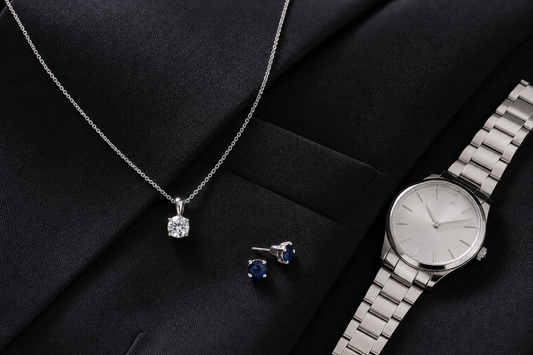
For an example of a lower-contact design, a moissanite pendant necklace typically avoids the frequent hand exposure a ring receives. It can still collect skincare and fragrance, so putting it on last remains helpful.

What Not to Use Without Specific Guidance
The internet contains aggressive cleaning suggestions that may be unnecessary or unsuitable for a finished jewelry piece. Avoid treating every cloudy appearance as a reason to use the strongest available product.
Do not automatically use:
- Toothpaste or abrasive household powders
- Bleach, chlorine, or strong household cleaner
- Undiluted chemicals with unknown metal compatibility
- Rough paper towels or scouring pads
- Pins, needles, or hard tools around prongs
- Boiling water or rapid temperature changes
- Ultrasonic or steam cleaning without confirming suitability
An ultrasonic cleaner may be appropriate for some jewelry and inappropriate for other pieces because of setting condition, secondary stones, treatments, plating, or construction. A professional jeweler can evaluate the complete item rather than the center stone in isolation.
How Sterling Silver Changes the Care Picture
Many accessible moissanite designs use 925 sterling silver. Silver may darken when it reacts with substances in the environment. That tarnish is a surface change in the metal, not cloudiness inside the moissanite. Because a darker setting changes the contrast around the stone, the whole piece may look less bright.
Use a care method that suits sterling silver and any finish applied to it. A clean polishing cloth can help with accessible metal surfaces, but avoid rubbing it aggressively across stones or into delicate settings. Liquid silver dips can be too strong or unsuitable for mixed-material jewelry, so do not use them unless the maker’s instructions clearly allow it.
Lumingem’s guide to cleaning and storing 925 sterling silver jewelry explains broader silver-care habits that are useful when a moissanite stone is set in this metal.
Prevention: Small Habits That Keep Jewelry Brighter
The easiest cleaning problem is the one that never builds into a thick film. A few simple habits make a noticeable difference.
Put Jewelry On Last
Finish moisturizer, sunscreen, makeup, fragrance, and hair products before putting on a ring, necklace, bracelet, or earrings. Let products absorb or dry first. This reduces direct transfer to stone and metal.
Remove It for Water and Active Tasks
Take jewelry off before swimming, showering, exercise, gardening, cleaning, and heavy work. Water itself is not the only concern; chlorine, salt, soap, impact, sweat, and pulling can affect the finished piece.
Wipe After Wear
A brief wipe with a clean, soft cloth removes some surface oil before it hardens into a more visible layer. For necklaces, wipe both the pendant and the section of chain that rests against skin.
Store Pieces Separately
Use a lined compartment or soft pouch. Fasten necklace clasps before storage and keep chains apart. Separate storage reduces scratching, tangling, and contact between tarnished metal and other pieces.
A clean-lined design such as a moissanite curved-bar necklace still benefits from these habits because small settings and chain links can hold cosmetic residue.

When Home Cleaning Is Not Enough
Professional inspection is the safer choice when:
- Haze remains after gentle, appropriate cleaning
- A stone feels loose or makes a faint clicking sound
- Prongs look uneven, bent, or caught on fabric
- A chain has stretched, kinked, or partially separated
- Plating appears worn or discolored
- The piece contains multiple materials with different care needs
- You see a chip, scratch, or structural change
Do not keep scrubbing when the cause is uncertain. Repeated pressure can stress a weakened setting, and harsh experimentation may create a larger problem than the original film.
How Often Should Moissanite Be Cleaned?
There is no single interval for every owner. A ring worn daily may benefit from a light wipe after wear and a gentle clean when visible residue appears. Earrings or a pendant used occasionally may need much less attention. The wearer’s use of skincare products, local water, and storage habits all influence buildup.
Use appearance and handling as the guide. Inspect the piece in bright, indirect light. Look under the stone where possible, check the clasp, and run a soft cloth over accessible surfaces. Regular observation is more useful than waiting until sparkle has noticeably disappeared.
Frequently Asked Questions
Does moissanite become cloudy with age?
Normal dullness is often caused by surface buildup rather than the stone internally changing. If careful cleaning does not improve the appearance, have the complete piece inspected.
Why does my moissanite look cloudy after handwashing?
Soap, moisturizer, and hard-water minerals can leave a film, especially under a ring stone. Rinse thoroughly and use a gentle cleaning method suitable for the stone and its setting.
What is a moissanite oil slick?
The phrase describes an iridescent surface film that can look like rainbow patches. Begin with gentle cleaning and avoid abrasive or harsh remedies. Persistent marks should be evaluated professionally.
Can I clean moissanite with toothpaste?
Toothpaste is abrasive and can affect metal finishes or scratch softer components. Mild soap, lukewarm water, and a very soft brush are generally a more cautious starting point when the product’s care instructions permit them.
Can I wear moissanite in the shower?
Removing it is the better habit. Shampoo, conditioner, soap, and hard-water residue can collect on the piece, while wet handling increases the risk of pulling a chain or losing an earring.
Is cloudy moissanite a sign that it is fake?
Appearance alone cannot establish identity. Buildup can dull many gemstones. If you need confirmation of material or condition, consult a qualified professional who can examine the piece directly.
Conclusion
Moissanite can look cloudy when everyday residue blocks the light that normally makes it lively. Lotion, soap, oil, cosmetics, hard-water minerals, and tarnished metal are common contributors. In many cases, gentle cleaning and thorough drying improve the appearance without aggressive products.
Treat the jewelry as a complete object, not only a durable center stone. Respect the setting, metal, chain, plating, and any secondary materials. Put jewelry on last, remove it for active or wet tasks, wipe it after wear, and store it separately. If haze remains or the setting looks uncertain, professional inspection is the most sensible next step.
Tags:
Previous
How to Choose a Lab-Grown Emerald Necklace: A Practical Buying Guide
Next
How to Layer Necklaces Without Tangling: A Practical Styling Guide