
How to Choose Lab-Grown Padparadscha Sapphire Jewelry
A good Padparadscha purchase begins with the color you will enjoy wearing, not with a technical label in isolation. This guide turns a famously nuanced pink-orange palette into practical decisions about cut, setting, scale and daily use.
See GIA’s sapphire reference for mineral and color terminology, and its care guidance for treatment-sensitive cleaning distinctions.
Start With the Pink-Orange Balance
Padparadscha is admired for a blended pink and orange appearance that can recall peach, coral or a quiet sunset. Neither component should feel like an accidental flash; look for a balanced face-up impression that remains attractive after the stone moves.
Compare photos made in neutral daylight and ordinary indoor light. A heavily edited image can exaggerate saturation, while warm bulbs can make any peach stone appear more orange.
What to check
Ask what the image lighting was, whether the pictured piece is the exact item, and how returns are handled if the color differs on arrival.
Understand What Lab-Grown Means
Lab-grown sapphire is corundum created in a controlled environment. It can share the essential chemical composition, crystal structure and hardness associated with mined sapphire, while origin and production method remain different.
Treat origin as a disclosure point, not a shortcut for quality. Color distribution, cutting, polish, setting work and seller accuracy still determine whether a finished jewel feels refined.
What to check
Read the product description for the exact material and any treatments or supporting documents instead of assuming every pink-orange lab-created stone has identical specifications.

Judge Cut by Light and Proportion
Oval, pear, cushion and heart shapes can all suit this color family. A successful cut returns lively light without a large dead center, distracting window or overly dark rim. Symmetry matters especially in hearts and pears.
Choose the outline for the wearer first, then assess the individual stone. An elegant silhouette with poor light return is less satisfying than a slightly less fashionable shape that looks animated from several angles.
What to check
Inspect front, side and moving video views when available. Check facet junctions, outline symmetry, girdle security and how completely the setting protects vulnerable points.
Choose a Setting for Real Life
Prongs expose more of the stone and can make a delicate color feel airy. Halos add visual scale and contrast. Bezel-like edges offer more perimeter protection but can change the profile and perceived size.
Match the architecture to routines. Someone who works with gloves, children or equipment may prefer a lower profile; an occasional-event piece can support more height and detail.
What to check
Check that prongs are even, the stone sits level, gallery openings are smooth and chains, clasps or ring shoulders join cleanly.
Compare Rings and Earrings Thoughtfully
Rings keep the color in view but receive more knocks. Earrings sit farther from daily impact and place the warm hue close to the face. The right category depends on visibility, comfort and maintenance habits.
For a decorative ring, compare the oval statement and snowflake-inspired Lumingem designs rather than deciding from carat language alone. For movement and easy styling, the leverback earrings provide a different wearing experience.
What to check
Use the verified product pages for dimensions and current specifications; do not infer scale from enlarged photography.

Select Metal and Supporting Stones
Cool sterling silver can sharpen the distinction between pink and orange, while warm-toned metals may emphasize peach. Small colorless accents can frame the center without competing when their size and spacing are controlled.
Metal choice should coordinate with the wearer’s existing wardrobe and care preferences. The most versatile option is the one that will be worn, maintained and combined naturally.
What to check
Confirm metal fineness, plating disclosure where applicable, accent-stone identity and any care limits stated by the seller.
Use a Buyer’s Verification Checklist
A considered purchase should connect visual appeal with concrete information: material identity, measurements, construction, care, shipping and returns. Good editorial language cannot replace these basics.
Save the listing and compare its written details with the photographs. If one description is ambiguous, ask before purchase rather than filling the gap with an assumption.
What to check
Record the product name, size, metal, gemstone description and order documents. These details make later care, insurance conversations or service requests easier.

Make the Final Choice Personal
Padparadscha color is inherently nuanced, so two informed buyers may prefer different balances. One may choose a softer blush-peach; another may want a livelier coral-orange. Preference is not a grading error.
After technical screening, return to the simple question: would the wearer reach for this piece on an ordinary week? A jewel that suits real style creates more value than one chosen only for rarity language.
What to check
Compare no more than a few finalists in similar lighting, then choose the design whose color, scale and construction work together.
Frequently Asked Questions
Is lab-grown Padparadscha sapphire real sapphire?
It is laboratory-grown corundum with sapphire’s essential crystal identity, but its origin is laboratory rather than mined. The product page should disclose that origin clearly.
What color should Padparadscha sapphire be?
The sought-after impression blends pink and orange. Exact balance varies, so evaluate neutral-light images and choose the blend you personally enjoy.
Is Padparadscha sapphire suitable for everyday jewelry?
Sapphire is hard, but a finished piece still needs sensible wear. Setting height, exposed corners, prongs and the wearer’s routine influence daily suitability.
Does sterling silver suit Padparadscha color?
Yes. Cool silver can provide clean contrast and keep a peach-pink center visually distinct. Personal wardrobe and maintenance preferences should guide the final choice.
What should I verify before ordering?
Confirm exact gemstone description, measurements, metal, setting, shipping, returns and care guidance. Use the current product page as the authoritative source.
Match the Purchase to One Real Occasion
Before building a shortlist, name the situation in which the jewelry will be worn most. A birthday dinner, an office wardrobe, and an engagement ring all place different demands on the design. You can appreciate an elaborate silhouette without choosing it for a task it doesn't suit.
For a gift, start with what the recipient already wears. Look at whether their earrings are close to the ear or have movement, whether rings are broad or delicate, and whether they prefer a warm finish or a silver-colored one. Those observations are more useful than assuming a romantic color requires a particular shape.
If the piece is for you, try a similar size from your jewelry box with the clothes you wear most. The comparison won't tell you the new stone's exact color, but it can reveal whether a broad halo, long drop, or prominent setting fits your normal proportions. Separate that question from the attraction of a close-up product photograph.
Compare Three Designs Without Confusing Their Specifications
The Padparadscha snowflake ring is listed with an oval lab-grown sapphire center and moissanite accents in sterling silver. Its decorative frame is part of the visual size; don't mistake that full outline for the center-stone dimensions.
The oval Padparadscha statement ring is listed with a 2-carat center and gold-plated sterling silver. Its description identifies clear marquise- and round-cut accent stones without naming their material. Don't transfer the snowflake ring's moissanite specification to this separate design.
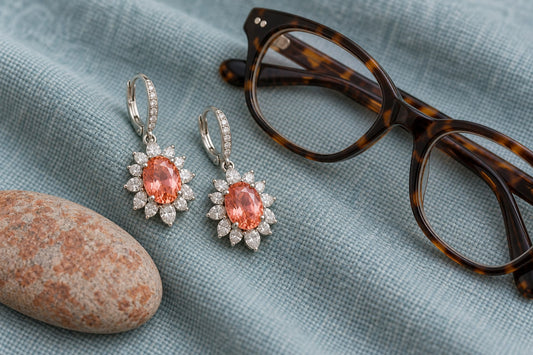
A leverback earring offers a third kind of experience because the color moves near the face rather than staying on the hand. Compare the full drop and closure comfort, not just the center shape. The Padparadscha earring guide covers those wearing questions in more depth.
Write down only what each page actually states. Leave an unknown dimension or accent material blank and ask about it if it changes your decision. A tidy comparison with an honest blank is better than a complete-looking table built from assumptions.
Separate Budget Priorities From Rarity Language
Laboratory origin and a pink-orange color description don't establish investment value. The useful budget question is what you are paying for in the finished piece: its size, materials, construction, and the services actually included. A gemstone name alone can't explain a price difference between two designs.
Decide which feature earns extra room in your budget. It could be a specific outline, a more comfortable closure, or the color you prefer in ordinary lighting. If a feature doesn't matter to how you will wear the piece, don't let a dramatic photograph make it essential.
Also consider maintenance. A plated finish and a detailed halo need appropriate care, and any future service depends on the design and provider. Don't assume a repair, resizing, or replating service is included unless the seller confirms it. Our Padparadscha care guide helps you plan a realistic routine.
Conclusion
Before ordering, revisit the shortlist on a different day using the same screen settings. If one candidate only appeals in a heavily styled image, ask for a simpler view. The pink-orange color guide explains how lighting and surrounding metal can influence the impression. Your final choice should survive an ordinary view, not depend on the most flattering angle available.
Choose lab-grown Padparadscha jewelry by connecting a specific color preference with a specific wearing need. Use accurate product language, compare photographs under useful lighting, verify dimensions and select the design that fits the wearer rather than an abstract ideal.
Explore Lumingem for current lab-grown gemstone jewelry and return to the exact item page for authoritative specifications, availability, shipping and care details.
Editorial responsibility: Lumingem Editorial Team. Product-specific questions: shopify@lumingem.com.
Tags:
Previous
Lab-Grown Birthstone Jewelry Gifts: Emerald, Ruby and Sapphire
Next
Paraiba-Colored Jewelry Gift Guide for Birthdays, Anniversaries and Travel Lovers
Related articles
How to Pack Hip-Hop Jewelry for a Weekend Away
Sep 14 2026