
How to Care for Lab-Grown Padparadscha Sapphire Jewelry
Lab-grown sapphire is durable, but a finished jewel is a system of gemstone, metal, prongs, hinges and accent settings. Good care protects every part instead of focusing on hardness alone.
See GIA’s sapphire reference for mineral and color terminology, and its care guidance for treatment-sensitive cleaning distinctions.
Know What You Are Caring For
For a current construction example, review the Lab-Grown Padparadscha Sapphire Snowflake Ring – 925 Sterling Silver. Use that item’s stated components and finish when deciding which inspection and care steps apply.
Confirm the exact gemstone, metal, plating and accent-stone description before choosing a cleaning method. The center may be sapphire, but the most delicate component determines the safe routine.
Keep order documents and product details. They help a jeweler understand the piece later.
Use current Lumingem listings as the primary reference for each design rather than assuming all pink-orange jewelry is constructed alike.
Create a Gentle Cleaning Routine
For compatible pieces, prepare lukewarm water with a small amount of mild soap. Let ordinary residue soften briefly, then use a very soft brush around the underside and setting.
Rinse carefully over a closed basin or bowl and dry with a clean lint-free cloth.
Avoid extreme temperature changes and never hold a ring over an open drain.

Handle Sterling Silver Thoughtfully
Sterling silver can tarnish as it reacts with the environment. Tarnish is different from dirt on the sapphire and should be addressed with material-appropriate methods.
Use an untreated soft cloth first. Use a treated silver polishing cloth only when the maker confirms it is suitable for the finish and surrounding materials.
Store dry and limit contact with chlorine, sulfur-rich products, household cleaners and cosmetics.
Avoid Abrasives and Unverified Devices
Toothpaste, baking-soda pastes and rough brushes can scratch metal and leave residue in settings. Strong cleaners may affect plating or supporting materials.
Ultrasonic and steam cleaning are not universal solutions; vibration or heat can worsen an already loose setting.
Use professional cleaning when construction or treatment information is uncertain.
Store Rings and Earrings Separately
A sapphire can scratch softer materials, while metal edges and accent stones can damage each other during movement. Separate compartments reduce friction and tangling.
Fasten earring clasps, place rings upright or flat without pressure and keep the box dry.
For travel, use structured slots rather than a loose pouch shared with other jewelry.

Inspect Prongs, Halos and Hinges
Before cleaning, look for a tilted stone, gap under a prong, unusual rattle or clasp that no longer closes decisively. Stop wearing the piece if security has changed.
Use bright light and gentle visual inspection; do not push the stone to test it.
A professional should correct loose prongs, worn hinges or distorted silver before routine wear resumes.
Adopt Better Wearing Habits
Put jewelry on after lotion, perfume, sunscreen and hairspray have dried. Remove it for swimming, showering, gardening, exercise and heavy housework.
Rings need more frequent attention than earrings because they contact surfaces and soap.
Small habits prevent buildup and reduce the number of aggressive cleanings later.

Set a Realistic Maintenance Schedule
Frequency depends on wear. A weekly visual check and occasional gentle cleaning may suit regularly worn pieces; occasional jewelry can be checked before and after each event.
Professional inspection is sensible when a setting catches, a clasp changes or the piece receives an impact.
Maintenance is preventive care, not evidence that sapphire is fragile.
Know when a pink-orange stone needs cleaning, not color correction
Before reaching for a cleaner, look at the earrings or ring in the same ordinary light you usually wear them in. Pink-orange color can look different under warm indoor light and daylight. A lighting difference is not a reason to polish harder. Surface film, on the other hand, can leave fingerprints or a greasy appearance around the setting.
Compare a clear photograph taken before cleaning with one taken afterward in the same place. This is a useful personal record, not a gemological test. If the stone looks changed even after the approved gentle routine, stop and ask for an assessment. Do not try stronger chemicals to bring back a color remembered from a brightly lit product photograph.
Clean around a halo without pushing on its small settings
A halo introduces many small edges where cosmetics can collect. It also introduces small stones and separate points of attachment. Examine the border before cleaning. A gap, tilted accent, or snagging edge needs attention before any brushing or rinsing.
If the complete piece is approved for mild soap and water, support it from the band or substantial metal frame. Use a light touch around accessible areas; do not dig beneath tiny stones with a pin, toothpick, or stiff brush. A blocked area that resists gentle care belongs with a jeweler. The purpose of cleaning is to remove residue, not to dismantle the setting.
Dry around the gallery and connections patiently. Place the piece on a clean cloth where it cannot roll off a counter. Don't put it straight into an airtight pouch while hidden moisture remains. That matters for the metal even when the center gemstone appears dry.
Separate the needs of a ring from those of a leverback earring
A ring gathers residue from hand cream and routine contact. Remove it before applying products, then wait until your hands are clean and dry before putting it back on. Do not leave it on a sink edge. A dedicated ring container makes the habit easier to repeat without turning removal into a loss risk.
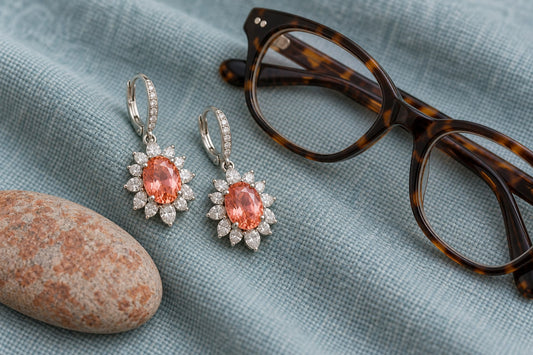
Leverback earrings need a different inspection. Open and close each mechanism gently and notice whether it behaves as usual. Avoid bending the wire to make the latch feel tighter. If one closes differently, keep the pair together in a box and arrange service. Wearing only the apparently secure earring does not resolve the other item's condition.
The Padparadscha earring guide discusses fastening and fit at purchase. Keep those same details in mind during ownership: changes in orientation, a dragging drop, or a hinge that feels different are more useful warning signs than a calendar reminder alone.
Protect the finish without treating every silver surface alike
A white appearance does not tell you whether the silver is unplated or has a surface finish. Ask before using an impregnated polishing cloth. Repeated rubbing can change a coating or remove intentional dark detailing. An untreated soft cloth is the more conservative first step when that information is missing.
If only a small metal area appears tarnished, don't automatically clean the entire jewel with a chemical dip. Treating the whole item exposes the stone and small settings to a process they may not need. The sterling silver care guide explains the difference between surface residue, tarnish, and finish wear.
What to tell a jeweler after a snag or impact
Describe the event and the change you noticed: a ring caught on a sweater, an earring fell onto tile, or a clasp no longer meets cleanly. Bring the product description and any treatment information supplied at purchase. These details help the professional decide what can be cleaned and what needs repair first.
Take a close photograph without applying pressure to the stone. Keep any detached component in the same secure container. Do not glue it back, and don't continue wearing the piece because the center still looks upright. A visual check at home cannot establish that a stressed setting is secure.
After professional service, ask which cleaning method is now appropriate and whether there are any specific follow-up checks. A repaired or refinished piece can have different care instructions from the generic guidance you saved when it was new.
Frequently Asked Questions
Can I clean lab-grown Padparadscha sapphire with soap and water?
Usually a mild-soap method is suitable for uncomplicated sapphire jewelry, but confirm that every component and treatment is compatible first.
Can sapphire scratch sterling silver?
Sapphire is much harder than silver, so separate storage helps prevent contact damage.
Should I use toothpaste on silver jewelry?
No. Toothpaste is abrasive and can scratch metal or lodge in settings.
Can I put the jewelry in an ultrasonic cleaner?
Only with material-specific professional guidance. Loose settings, treatments or supporting stones can make ultrasonic cleaning unsuitable.
How often should prongs be checked?
Inspect visually before regular wear and after impacts. Seek professional service whenever a stone moves, rattles or a prong appears changed.
Keep a Simple Padparadscha Care Log
A short maintenance note can be more useful than frequent cleaning. Record the date, the reason for cleaning, the method used and anything observed around prongs, hinges or silver. Over time, the log shows whether buildup follows sunscreen season, daily hand cream or occasional events, allowing the routine to become gentler and more targeted.
After an impact, snag or dropped earring, add a visual inspection before the next wear. Photographing the setting in good light can help identify a new change, although it does not replace professional examination. Keep harsh home experiments out of the log: if gentle cleaning does not restore the piece, the next step is qualified service, not stronger chemistry.
Conclusion
Care for pink-orange sapphire jewelry by following the limits of the entire piece. Gentle cleaning, separate storage, and attention to changing clasps or settings are more useful than aggressive polishing. When the material or treatment is uncertain, get specific guidance before proceeding.
Explore Lumingem for current lab-grown gemstone jewelry and return to the exact item page for authoritative specifications, availability, shipping and care details.
Editorial responsibility: Lumingem Editorial Team. Product-specific questions: shopify@lumingem.com.
Tags:
Previous
Lab-Grown Padparadscha Sapphire Earrings Guide: Color, Clasp and Comfort
Next
How to Choose Paraiba-Colored Lab-Grown Gemstone Jewelry
Related articles
How to Pack Hip-Hop Jewelry for a Weekend Away
Sep 14 2026