
How to Choose a Lab-Grown Emerald Necklace: A Practical Buying Guide
An emerald necklace can be vivid without being difficult to wear. The green sits close to the face, works across seasons, and adds a clear focal point to clothing that might otherwise feel neutral. Yet two emerald pendants with similar product photographs can look very different once worn. Stone shape, color balance, setting, chain length, and pendant scale all affect whether a necklace becomes an everyday signature or stays in its box.
A useful buying process begins with the wearer rather than the largest-looking stone. Think about her usual neckline, preferred metal, daily routine, and the colors already in her wardrobe. Then examine the construction and proportions of the necklace. This guide explains those decisions in practical order so you can compare a lab-grown emerald necklace with more confidence.
First, Decide What Role the Necklace Should Play
Before comparing cuts or carat descriptions, decide how visible you want the necklace to be. An everyday emerald pendant should feel easy with a T-shirt, knit, or open-collar shirt. An occasion necklace can use a larger stone, a decorative halo, or a more elaborate setting because it does not need to disappear into a weekday wardrobe.
There is also a middle ground: a pendant with a distinct green center stone and a restrained outline. This type of design can add color to workwear while still feeling polished enough for dinner or a wedding. If versatility is the priority, look for a clear silhouette, moderate scale, and a chain that can be adjusted to more than one length.
Ask three questions before shopping:
- Will this be worn weekly, occasionally, or mainly for celebrations?
- Should the emerald be the only focal point, or should the setting add sparkle and detail?
- Does the wearer usually choose delicate jewelry, visible statement pieces, or something between the two?
These answers narrow the field more effectively than choosing by stone size alone.
Understand Lab-Grown Emerald Color
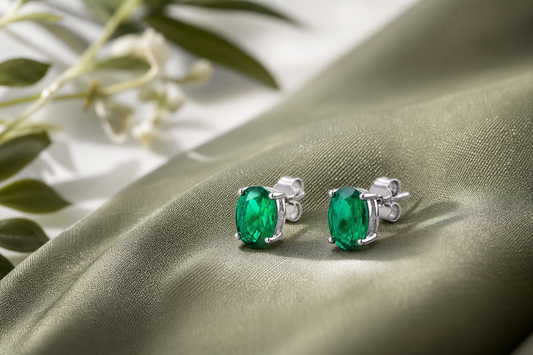
Emerald color is rarely just “green.” One stone may look cool and blue-green, another may lean warmer, and a third may appear deep and forest-like. Lighting changes the impression as well. A pendant photographed under bright studio light can look darker in a softly lit room, while daylight may reveal more color variation.
When reviewing a product page, compare all available photographs rather than relying on the first image. Look for a consistent center of color, enough brightness to see the shape of the stone, and a tone that works with the wearer’s wardrobe. A very dark emerald can feel dramatic but may show less visible detail at a distance. A medium green often reads clearly against both light and dark clothing.
Lab-grown does not mean every emerald will look identical. Growth method, cutting, and finishing can influence the visible result. Product descriptions should identify the stone and metal, while photographs and measurements help you judge the design you will actually receive. For broader background on terminology and jewelry considerations, read Lumingem’s lab-created emerald jewelry guide.

Choose a Stone Shape That Matches Her Style
Shape changes the personality of an emerald necklace even when the color is similar.
Emerald Cut: Architectural and Refined
The rectangular emerald cut emphasizes clean lines. Its stepped appearance feels composed and slightly formal, making it a strong match for tailored clothing, square necklines, and minimal wardrobes. Because the outline is graphic, it can look substantial without needing a complicated setting.
An emerald-cut lab emerald necklace is worth considering when the wearer likes symmetry, structured accessories, or classic jewelry with a modern edge. Examine the side view of the setting and the way the pendant connects to the chain; these details affect how neatly it lies.
Pear Cut: Soft Movement and a Lengthening Effect
A pear-shaped stone combines a rounded end with a tapered point. On a necklace, that vertical line can visually lengthen the neckline. The shape feels softer than a rectangle but more distinctive than a round stone. It works particularly well with V-necks, open collars, and simple dresses.
The direction of the point matters. A point-down setting creates a traditional drop effect, while other orientations may feel more contemporary. A pear-shaped lab emerald pendant provides a practical reference for comparing this silhouette with a rectangular design.
Round, Heart, Floral, and Geometric Shapes
Round emeralds feel balanced and familiar. Heart shapes communicate a clear romantic message, making them more occasion-specific. Floral and sunburst settings add visual detail around the green center and can appear larger on the neckline. Geometric settings suit someone who prefers design-led jewelry rather than traditional symbolism.
There is no universally best shape. The right choice is the one that resembles the lines already present in her jewelry: rounded hoops, angular watches, delicate chains, or sculptural accessories.
Compare Solitaire, Halo, and Decorative Settings
A solitaire setting keeps attention on the emerald. It is often the easiest style to wear repeatedly because the outline remains clean. Check that the prongs or bezel look even and that the stone sits securely without an unnecessarily high profile.
A halo surrounds the center with smaller bright stones or decorative metalwork. This can define the emerald color and make the pendant more visible from a distance. A halo also creates a dressier impression, which may suit someone who wants one necklace to cover birthdays, dinners, and formal events. The Lumingem lab-grown emerald halo necklace shows how a framed center stone differs from a minimalist pendant.
Decorative settings include floral, star, fan, dancing-stone, and vintage-inspired designs. These are more expressive and can make a thoughtful gift when the motif has personal relevance. However, more detail also means more edges and small spaces to clean. Consider whether the recipient enjoys caring for intricate jewelry or prefers a smooth, simple piece.
Select the Metal by Looking at Existing Jewelry
Sterling silver and other white metals give emerald a crisp, cool frame. The contrast can make green appear clear and modern, especially with black, white, navy, denim, and gray clothing. White metal is an easy choice for someone who already wears silver-toned earrings, a steel watch, or cool-toned rings.
Yellow-toned metal creates a warmer, richer effect. It can make emerald jewelry feel more traditional or vintage-inspired and pairs naturally with cream, camel, chocolate, burgundy, and warm prints. Rather than following a rule about skin tone, look at the metal the wearer chooses voluntarily. The jewelry already in regular rotation is the most reliable guide.
If she mixes metals, choose the finish that best supports the pendant design. A structured emerald cut often looks especially clean in white metal; a floral or antique-inspired motif may feel warmer in yellow tone. Either can work when it connects to her existing collection.

Get the Chain Length and Pendant Scale Right
Chain length determines where the emerald lands, which affects both comfort and styling. A pendant that sits high near the collarbone is visible with open shirts and many crew necks. A slightly longer chain works well with V-necks, soft blouses, and layered looks. Adjustable chains are useful because the same pendant can move between necklines.
Do not estimate scale from macro photography alone. Check the listed pendant dimensions and, when available, the chain length. Use a ruler against the neckline or compare the measurements with a necklace already owned. A few millimeters can change the impression from delicate to prominent.
Also inspect the bail, the loop that connects pendant and chain. It should be proportionate to the pendant and allow the chain to move without looking pinched. If you may eventually change the chain, confirm that the bail opening is large enough for the intended clasp or chain end.
For broader comparison, the Lumingem necklaces collection helps you see different pendant scales, chain styles, and gemstone colors in one place.
Check Construction Before You Focus on Price
Good product evaluation is mostly about details that influence wear. Look for clear material information, close photographs, side views, dimensions, and clasp details. Prongs should appear balanced around the stone. A pendant should hang straight, and the chain should look proportionate rather than too light for the setting.
Price can reflect design complexity, stone size, metal, finishing, and brand service, but it does not replace inspection. Compare like with like. A simple solitaire and a detailed halo solve different style needs, even if both contain a green center stone. The better value is the necklace that fits the wearer’s routine and receives regular use.
For a gift, also check delivery expectations, return terms, packaging, and whether the recipient has sensitivities or strong metal preferences. Avoid guessing when a product page leaves an important detail unclear.
Think About Wear, Storage, and Cleaning
Fine jewelry benefits from routine care regardless of the stone’s origin. Put the necklace on after skincare, fragrance, sunscreen, and hair products. Remove it before swimming, showering, exercise, cleaning, and sleeping. These habits reduce residue, chain stress, and accidental impact.
After wear, wipe the pendant and chain gently with a clean, soft cloth. Store the necklace separately so the chain does not knot around rings or bracelets. Fastening the clasp before placing it flat in a lined compartment can help prevent tangles.
For occasional at-home cleaning, use a cautious method based on the product’s stated materials: lukewarm water, a small amount of mild soap, a soft cloth or very soft brush, and thorough drying. Avoid bleach, abrasive paste, and aggressive cleaning devices unless a qualified jeweler confirms they are suitable for the exact piece. Settings should be inspected periodically, especially if the necklace is worn often.

A Simple Buying Checklist
Before purchasing, confirm the following:
- The emerald tone looks appealing in more than one photograph.
- The stone shape matches the wearer’s usual style.
- The setting is appropriate for everyday or occasion use.
- The metal coordinates with jewelry she already wears.
- Pendant dimensions are understood, not guessed from a close-up.
- Chain length works with her common necklines.
- The clasp and bail appear practical and secure.
- Material, care, delivery, and return information are clear.
If most of these points are easy to answer, the necklace is more likely to feel intentional when it arrives.
Frequently Asked Questions
Is a lab-grown emerald necklace suitable for everyday wear?
It can be worn often when the setting and scale suit the wearer’s routine. Remove it for water, exercise, cleaning, sleep, and activities that could pull the chain or strike the pendant.
What emerald necklace shape is most versatile?
Round, emerald-cut, and restrained pear-shaped pendants are generally easy to style. Versatility depends more on the wearer’s clothing and existing jewelry than on one universally correct shape.
Is a halo or solitaire emerald pendant better?
A solitaire feels cleaner and places all attention on the green stone. A halo creates more visual presence and a dressier outline. Choose according to how often and where the necklace will be worn.
What chain length should I choose for an emerald pendant?
Use the wearer’s common necklines as the guide. Collarbone lengths work with many open shirts and crew necks, while slightly longer chains suit V-necks and layering. An adjustable chain provides useful flexibility.
Does a lab-grown emerald make a good gift?
Yes, especially when the recipient already wears green or enjoys colored gemstones. A necklace avoids ring sizing, but you should still match her metal preference, pendant scale, and personal style.
Conclusion
Choosing a lab-grown emerald necklace is less about finding the biggest green stone and more about creating a reliable match between color, design, and real life. Start with the role the necklace should play, then compare shape, setting, metal, scale, and chain length. Confirm construction and care details before deciding.
The strongest choice will look like it already belongs in the wearer’s wardrobe. Whether that means a clean emerald cut, a graceful pear-shaped drop, or a framed halo, an emerald necklace earns its place when it is comfortable, recognizable, and easy to reach for again.
Tags:
Previous
Colored Gemstone Jewelry Gifts: How to Choose a Meaningful Piece for Her Style
Next
Does Moissanite Get Cloudy? Why It Can Look Dull and How to Restore Its Sparkle