
Lab-Grown Padparadscha Sapphire Ring Guide: Shape, Setting and Wearability
A Padparadscha ring combines a delicate sunset color with the most exposed jewelry category. The best choice balances romance with setting security, comfortable proportions and realistic maintenance.
See GIA’s sapphire reference for mineral and color terminology, and its care guidance for treatment-sensitive cleaning distinctions.
Choose the Mood Before the Shape
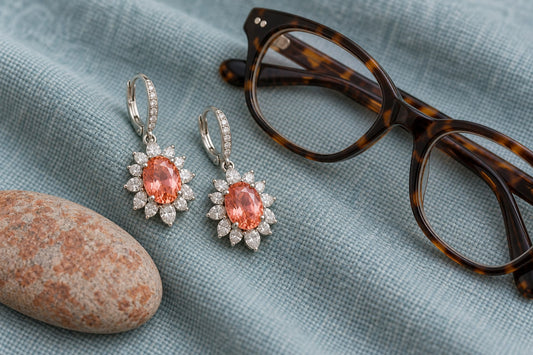
An oval center can feel classic, while a snowflake-inspired frame adds a more decorative outline. Look at the whole ring, not just the gemstone shape, when deciding whether the design fits your wardrobe.
A balanced oval has an outline you enjoy from end to end. A clustered frame should appear orderly rather than crowded, with its center securely seated.
What to check
Compare the oval statement ring and snowflake ring at equal image scale, then verify listed dimensions.
Assess the Center Stone Face Up
Study color balance, brightness and outline as a unit. A ring is seen from above most often, so a lively face-up impression matters more than technical numbers alone.
Check whether the center looks transparent through the middle or excessively dark near the edges. Subtle facet variation is normal; a distracting dead area is different.
What to check
Use video or multiple angles when available and remember that enlarged product photography is not life-size.

Understand Halo Scale and Contrast
A halo expands the ring's visual outline and adds contrast around its center; it should not be treated as a guarantee of impact protection. It also creates more small settings that may require inspection over time.
Fine halos feel airy; bold halos make a stronger statement. The correct scale depends on finger size, wardrobe and whether the ring will be worn alone or beside another band.
What to check
Look for even spacing, consistent accent size, clean prongs and a centered sapphire.
Check the Side Profile
Profile determines how often a ring catches on knitwear, gloves or hair. A raised gallery can admit light and allow a band to sit closer, but it also increases exposure.
Low settings may feel practical yet can limit stacking or cleaning access. There is no single best height; daily activities decide the tradeoff.
What to check
Inspect side photos for smooth shoulders, level stone seating and sufficient clearance beneath the point or pavilion.
Match Ring Architecture to Routine
An occasional dinner ring can prioritize visual drama. For frequent wear, consider desk work, commuting, and the need to remove the ring before water, chemicals, or rough tasks according to its care instructions.
Sapphire is hard, but hardness measures scratch resistance rather than immunity to chips, loose prongs or bent silver.
What to check
Remove the ring for gym equipment, heavy lifting, harsh chemicals and situations where impact is likely.

Get Size and Proportion Right
Band width and inner profile influence fit; a broad decorative top affects balance and can make a ring more likely to rotate, but it does not by itself determine the band size. Temperature and time of day also change finger size, so measure under ordinary conditions.
A ring that spins may place the center at greater risk; one that is too tight is uncomfortable and difficult to remove.
What to check
Follow the current sizing information on the product page and ask about resizing feasibility before ordering.
Plan Care Before Purchase
Ring undersides collect lotion, soap and skin oils. A design with accessible openings is easier to clean gently, while dense halos may benefit from periodic professional inspection.
Use lukewarm water, mild soap and a very soft brush only when compatible with all materials disclosed for the piece. Dry thoroughly with a lint-free cloth.
What to check
Do not use toothpaste, abrasive silver polish on gemstones or an ultrasonic device without material-specific guidance.

Make a Confident Final Comparison
Place finalists in a simple table: color, shape, top dimensions, profile, metal, accent stones, return terms and intended frequency of wear.
This prevents a dramatic image from hiding a practical mismatch. It also makes conversations with the seller precise.
What to check
Choose the ring whose specifications and visual character align, then keep order records for future care.
Frequently Asked Questions
Is a large Padparadscha ring practical for regular wear?
It depends on the profile, fit, setting, and your routine. A broad decorative top needs room around it. Remove the ring for impact, harsh chemicals, and other activities excluded by its care instructions.
Does a halo make the center stone look larger?
A halo expands the bright visual area and often increases perceived size, although listed dimensions remain the best scale reference.
Can I wear a lab-grown sapphire ring every day?
Many people do, but daily suitability depends on construction and habits. Remove it for rough work, chemicals and high-impact activity.
How do I clean a Padparadscha sapphire ring?
Start with the product's instructions and a soft dry cloth. Use water or a cleaning solution only if it is suitable for all disclosed materials, treatments, and finishes.
Which Lumingem ring style should I choose?
Compare the oval statement design with the snowflake-inspired ring using their current specifications. Their accents and overall outlines differ, so choose by fit and construction as well as color.
Plan the Ring Around the Dominant Hand
A ring worn on the dominant hand encounters more doors, bags, keyboards and tools. If the Padparadscha ring will live there, give extra weight to profile, protected points and smooth outer edges. A right-handed wearer choosing a right-hand statement ring may reasonably prefer a lower silhouette than someone reserving it for dinners.
Stacking adds another variable. Place a plain band beside a paper outline of the ring top and consider whether halo edges, raised galleries or shoulders would rub. Do not assume every ring can be resized or stacked comfortably. Confirm those questions before purchase, because construction that looks beautiful from above may set firm limits when another band enters the picture.
Read Two Current Ring Descriptions Side by Side
The lab-grown Padparadscha snowflake ring lists an oval sapphire center, moissanite accents, and a sterling silver base. Its decorative frame makes the full ring face larger than the center alone. Ask for the overall top dimensions if the listing doesn't provide enough information to judge that scale.
The 2-carat oval Padparadscha statement ring lists a gold-plated sterling silver band and clear marquise- and round-cut accent stones. The accent material is not named in that description, so it should not be assumed to match the snowflake ring's moissanite accents.
Those differences make a more useful comparison than deciding which photo looks brighter. Note the selected size, exact gemstone wording, surface finish, and any missing measurement. The statement ring's description also notes possible slight variation in center color, which matters if you are trying to match an existing piece.
Try a Paper Outline Before Committing to a Large Top
If the seller supplies the ring's top length and width, draw those measurements on paper and cut out the outline. Hold it over the intended finger to judge coverage. This won't simulate height, weight, or comfort, but it can prevent a common mistake: confusing a close-up photograph with a wearable scale.
Check the outline with neighboring fingers relaxed, then with your hand lightly closed. A broad decorative ring can overlap the space near adjacent fingers even when its band size is correct. If that overlap bothers you, a smaller top may be a better choice than changing the ring size.
Do not derive measurements from a photograph unless a reliable scale is provided. A model's hand isn't a standardized ruler. Ask for a dimension instead of estimating it from the center-stone carat figure.
Choosing a Ring as a Gift
A surprise ring involves two separate uncertainties: taste and fit. If you can discreetly compare a ring the recipient wears on the same finger, that is a more relevant reference than a ring from a different hand. Even then, band width and shape can change the wearing feel.
Avoid assuming that an adjustable ring solves every sizing problem or that a fixed ring can always be resized. Construction, stone placement, and the finish can limit alterations. Confirm the options before purchase, especially when a gift has a deadline.
For a recipient who rarely wears large rings, choose the color first and keep the outline within their usual range. You can make the gift personal through the shade and occasion without choosing the largest available setting. Read current gift and return conditions rather than assuming a general exchange promise applies to every item.
Pairing With a Band Without Metal-on-Metal Wear
A straight band may leave a gap beside a raised or projecting ring head. That gap is not necessarily a flaw. Forcing two pieces into contact can rub a band against the underside of a setting or against small accent stones.
Ask a jeweler to assess the pair if you plan to wear them together frequently. A contoured band, a different finger, or wearing the rings separately can be more practical than chasing a perfectly flush photograph. The everyday setting guide discusses profile and contact points.
Keep the color decision separate from that mechanical fit. Our Padparadscha color guide helps compare pink-orange appearances without mistaking the surrounding metal for the stone's own color.
Conclusion
The right Padparadscha ring should look good from above and work comfortably from the side. Use accurate product language, compare photographs under useful lighting, verify dimensions and select the design that fits the wearer rather than an abstract ideal.
Explore Lumingem for current lab-grown gemstone jewelry and return to the exact item page for authoritative specifications, availability, shipping and care details.
Editorial responsibility: Lumingem Editorial Team. Product-specific questions: shopify@lumingem.com.
Tags:
Previous
Padparadscha Sapphire Color Guide: Pink, Orange, Tone and Lighting
Next
Lab-Grown Padparadscha Sapphire Earrings Guide: Color, Clasp and Comfort
Related articles
How to Pack Hip-Hop Jewelry for a Weekend Away
Sep 14 2026