
Lab-Grown Gemstones: Origin, Color, and What to Compare
Lab-grown gemstones are created in a controlled setting rather than formed naturally in the earth. That origin disclosure is useful, but it isn't a complete description of a piece of jewelry. You still need to know which gemstone it is, what color and dimensions to expect, and how the setting is made.
For the distinction between material identity and origin, GIA explains synthetic counterparts and imitations. Its sapphire reference identifies corundum and its color range. Neither reference certifies an individual jewel or its supply chain.
A lab-grown sapphire, a lab-grown emerald, and a blue diamond simulant are not interchangeable names. Neither is a color name proof of a gemstone species. This guide helps you read those distinctions and compare jewelry without relying on vague promises about perfection, sustainability, or value.
What lab-grown actually describes

A laboratory-grown version of a gemstone has essentially the same chemical composition and crystal structure as its natural counterpart. The difference is its growth origin. A laboratory-grown sapphire is sapphire, and a laboratory-grown emerald is emerald. They are not mined stones and should not be presented as such.
The word synthetic is also used in gemology for laboratory-created material. In everyday conversation, that word can sound like an imitation. The distinction is worth understanding: a laboratory-grown version of a gem and a different material that imitates its appearance are separate categories.
For example, a green stone doesn't become emerald simply because its color resembles emerald. Glass, cubic zirconia, and other materials can be colored to look similar. A clear description identifies the material rather than relying on a photograph or an evocative shade name.
Read color names separately from material names
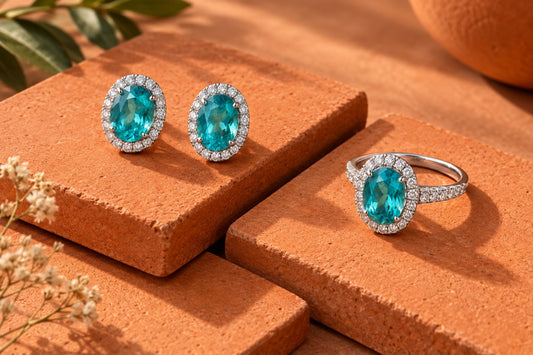
Some jewelry uses familiar gemstone terms to communicate color. Paraiba-colored jewelry is a good example: the name can describe a vivid blue-green appearance, but it doesn't establish that the stone is copper-bearing tourmaline. The actual material must be disclosed separately.
Our guide to Paraiba color labels explains why that distinction matters. The practical habit is simple: look for a specific gemstone identity next to any color-inspired name, and ask for clarification if it's missing.
Three familiar gemstone families
Sapphire
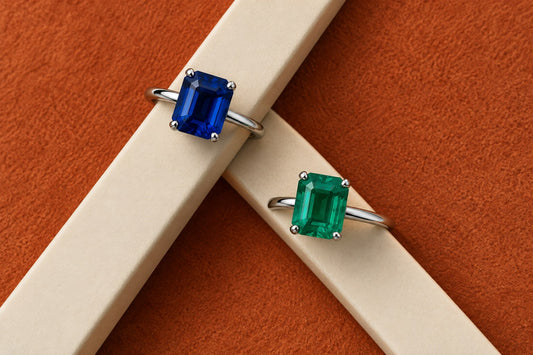
Sapphire is a variety of corundum and occurs in colors beyond blue. Laboratory-created sapphire jewelry can offer many color choices, but a family name doesn't predict the exact hue of an individual stone. A deep blue pendant and a pale pink ring need different visual comparisons.
When viewing lab-grown sapphire jewelry, check the listed color and measurements for the selected design. Don't assume every piece in a collection shares the same shade, accent stones, or finish.
Ruby
Ruby is the red variety of corundum. Laboratory-grown ruby should be described with its origin, not simply promoted as a mysterious red gem. Red itself covers a broad visual range, and lighting can influence how warm, cool, bright, or dark a stone looks.
The lab-grown ruby collection is a place to compare shapes and settings, but the individual product page should answer the material question. A red center stone doesn't establish what the smaller surrounding stones are made from.
Emerald
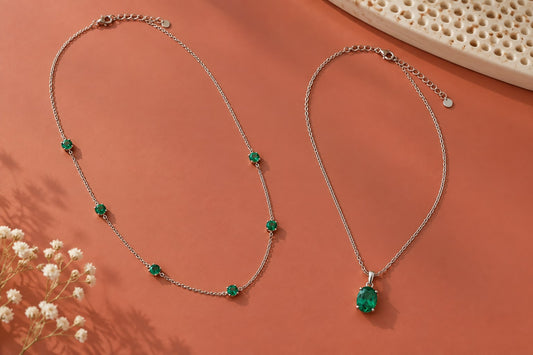
Emerald is a green variety of beryl. Laboratory-grown emerald is not green sapphire, and it shouldn't automatically receive the same cleaning advice as sapphire jewelry. Material identity, any treatments, and the complete setting determine appropriate care.
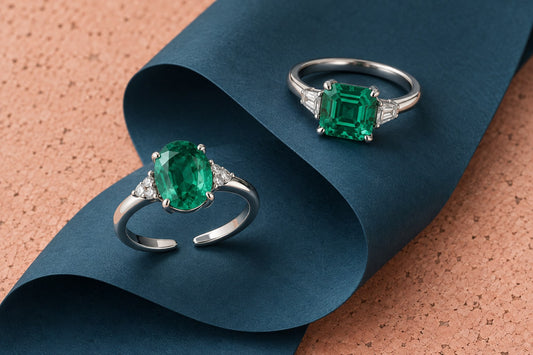
Browse lab-grown emerald jewelry with an eye on both color and structure. An open-backed pendant, a halo ring, and a tennis bracelet can present green stones very differently even when their gemstone identity is the same.
Color is a combination, not a single adjective
Descriptions such as rich, vivid, or ocean blue can help communicate a mood, but they're not standardized measurements. Look at hue, tone, and saturation separately. Hue is the color family, tone describes lightness or darkness, and saturation concerns the strength of the color.
A darker stone isn't automatically better. It might offer the dramatic look you want, or it might appear too dark in your usual indoor lighting. A lighter stone can show its facet pattern clearly but feel less intense. The preference belongs to the wearer, not a universal rule.
Review several angles when possible. A single image can't show how the stone behaves as it moves, and a phone display can alter color. Ask about the photography if the images vary greatly. Written measurements and material descriptions remain more dependable than guessing from an enlarged picture.
For earrings, compare the pair rather than just the most attractive individual stone. For a bracelet, look along the whole line for a coherent appearance. These are design judgments about the finished piece, not evidence that one shade is objectively superior.
Cut and dimensions shape what you see

Shape describes the outline, such as oval, pear, or rectangular. Cut also involves the facets and proportions that control the way light travels through the stone. Two gems with the same outline can have noticeably different visual patterns.
Compare physical dimensions rather than relying on carat weight alone. Carat measures weight, and different gemstone materials have different densities. A weight figure for an entire necklace also doesn't tell you the size of its center stone. Find out whether the listing gives individual or total stone weight.
Take a ruler to a piece you already like. That small step is often more useful than another magnified photograph. The same measurement can feel understated as a pendant and substantial as a ring, depending on placement and the surrounding metal.
Don't let the gemstone distract from construction
A beautiful stone still needs a suitable setting. Look at the prongs or bezel, the height of the mounting, and the way the piece closes. Check whether the design leaves vulnerable points exposed and whether it suits the activities you expect to do while wearing it.
Read the metal and finish separately. Sterling silver identifies the base alloy; a plated finish describes a surface layer. Neither statement identifies the gemstone. If you need a refresher, our sterling silver buying guide breaks down the terminology.
For a necklace, confirm the chain length and whether a chain is included. For earrings, check dimensions and backing information. For bracelets, consider usable length and clasp design. These details can decide whether a piece becomes a favorite or remains in its box.
What environmental and ethical claims need
Laboratory growth describes how a gemstone was made, not the entire social or environmental history of a finished item. Production uses energy and materials. Metal sourcing, manufacturing, transport, and working conditions are separate parts of that history.
Claims such as carbon neutral, sustainable, or ethically superior need specific evidence. Ask what is being measured, which production stages are included, and who verified the statement. A general claim about all lab-grown gemstones isn't proof about the particular item you're considering.
You can prefer a disclosed laboratory origin without making unsupported comparisons. Transparency about material and origin is valuable on its own. If a seller doesn't publish a substantiated environmental assessment, don't fill the gap with assumptions in either direction.
Price, documentation, and realistic expectations

Compare complete pieces with similar specifications. A low price might reflect a smaller stone, a different base metal, a simpler setting, or a different material entirely. A higher price isn't automatic proof of a better gem. Read the details that explain the difference.
If a report is supplied, check what it actually identifies. A report can address gemstone identity, origin, or other characteristics, but its scope depends on the issuing laboratory and document. A generic card isn't the same as a report tied to the specific stone.
Use our gemstone document guide before treating the word certified as a complete answer. Keep your order details and any supplied documentation together so you can refer to the exact item later.
Care starts with the full specification
Don't put every lab-grown gemstone into the same cleaning routine. Different materials, treatments, finishes, and settings can require different handling. When those details aren't clear, start with a soft dry cloth and ask the seller before soaking, steaming, or using an ultrasonic machine.
Store jewelry so pieces don't rub against one another. Remove it before activities likely to strike or catch a setting. If a stone moves or a clasp no longer closes securely, stop wearing the piece until it's checked. The growth origin doesn't eliminate ordinary jewelry maintenance.
Frequently asked questions
Are lab-grown gemstones the same as imitations?
No. A lab-grown counterpart has essentially the same chemical composition and crystal structure as the named natural gemstone. An imitation is a different material chosen to resemble another gem.
Does lab-grown mean flawless?
No. Laboratory origin does not guarantee a particular clarity, color, cut, or overall quality. Judge the individual stone and finished piece using the available specifications and images.
Is every Paraiba-colored gem tourmaline?
No. Paraiba-colored can describe an appearance rather than a gemstone species. Check the actual material disclosure instead of assuming that a blue-green stone is copper-bearing tourmaline.
Are all lab-grown gemstones environmentally superior?
That cannot be assumed from the origin label alone. Environmental comparisons require evidence about energy, materials, production stages, and the comparison being made. Broad unsupported claims aren't enough.
Conclusion: clear information makes color easier to choose
Begin with the gemstone's real identity and disclosed origin. Then compare its color, physical size, setting, and care needs. That approach lets you enjoy the range of lab-grown gemstone jewelry without asking a marketing label to answer questions it can't. Choose the piece whose details are clear and whose design fits your life.
Editorial responsibility: Lumingem Editorial Team. Product-specific questions: shopify@lumingem.com.
Tags:
Previous
Moissanite vs. Diamond: Sparkle, Hardness, and Key Differences
Next
Moissanite vs. Lab-Created Diamond: How to Choose the Right Sparkle
Related articles
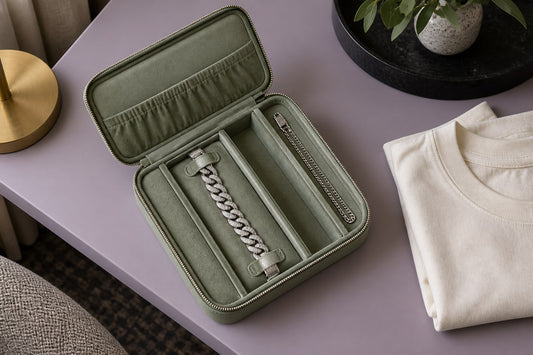
How to Pack Hip-Hop Jewelry for a Weekend Away
Sep 14 2026