
Lab Grown Emerald Rings: Low-Profile or Statement Settings?
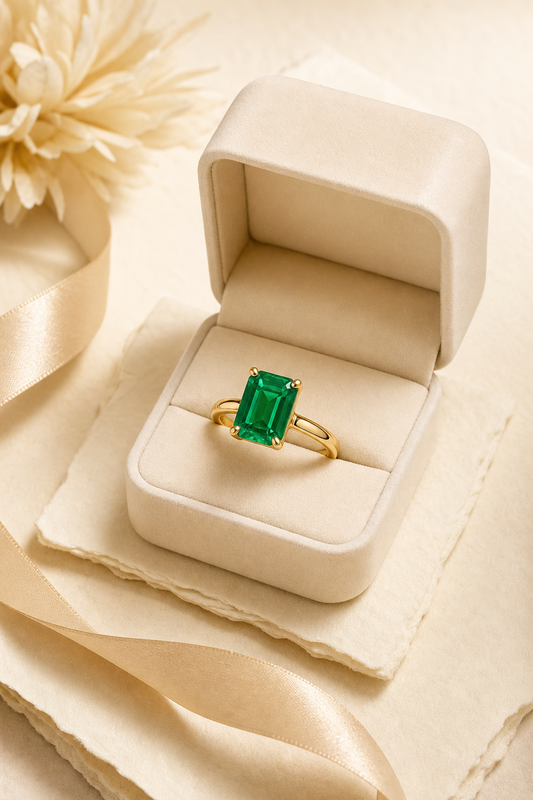
A lab grown emerald ring can look restrained or dramatic without changing its basic color direction. Much of that difference comes from the setting: how high it sits, how far it spreads across the finger and how the metal frames the stone. Before choosing between a low-profile design and a statement ring, look beyond the front-view photograph.
The useful question is not which setting is universally better. It is which one suits the way you dress, the work you do with your hands and the amount of presence you want from a ring. Start with a style you already find comfortable, then compare what would change.

Define low-profile by the actual measurements
Low-profile is a relative description. Ask for the height of the setting above the finger when that measurement is not provided. A side view can add useful context, but the word low alone does not tell you exactly how the piece will sit.
Also check the width of the setting and the dimensions of the center stone. A ring may sit relatively close to the hand while still having a broad face. Another may have a small outline but a taller basket. Height and coverage are separate parts of the design.
Think about sleeves and everyday movement
If you wear fitted cuffs or textured knitwear, consider how the ring might interact with them. A raised setting or projecting detail may be more noticeable as your hands move through clothing. A lower outline may suit your preferences, but it should not be treated as a promise that it will never catch.
Try normal movements during an appropriate fitting: bending your finger, lightly closing your hand and checking the fit beside adjacent fingers. Do not test a ring by forcing it against fabric or putting pressure on the stone. Comfort should be evaluated without stressing the jewelry.

Give a statement setting room to work
A statement ring does not need to be reserved for formal clothing. It can look deliberate with a plain shirt or a simple dark outfit because the rest of the look gives it space. If the ring already has a strong outline, you might prefer fewer accessories on the same hand.
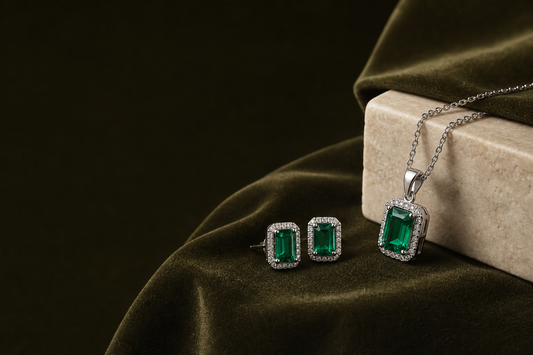
Consider whether you want the stone, the surrounding metal or a border of accent stones to be the main visual feature. A large face created by a halo will feel different from a similarly sized single-stone design. Compare the complete measurements rather than assuming a larger overall ring contains a larger center stone.
Check the band as carefully as the top
The decorative face attracts attention, but the band affects everyday fit. Look at its width, shape and thickness where information is available. A wide band and a narrow band may feel different even when their stated ring sizes match.
If you want to wear another ring alongside it, ask about the space beneath the setting and try the pieces together when possible. Do not assume a band will sit flush because the top view looks simple. Practical fit is a separate question from whether two designs look attractive beside each other in a photograph.
Keep gemstone origin separate from setting quality
A created emerald ring title identifies a direction for your search, not the full construction. Read the stated stone identity and origin, the metal and finish, the accent stone descriptions and any disclosed treatments. The same origin label can appear on very different ring designs.
Ask for missing details before deciding that two rings are comparable. Laboratory origin does not make every setting suitable for every activity, and a taller setting is not automatically evidence of higher quality. Judge the actual design and its intended use rather than relying on broad labels.

Choose the ring you will reach for
Picture two real situations: an ordinary day and an occasion when you want the jewelry to stand out. If one ring suits both, it may be a useful starting point. If you prefer different pieces for each, that is a wardrobe decision rather than a reason to force a single design to do everything.
While exploring lab grown gemstone jewelry at Lumingem, compare individual specifications and follow the care instructions for the chosen piece. The right emerald ring setting is the one whose proportions, feel and appearance make sense for you, whether that means a close-to-the-hand accent or a more sculptural focal point.
Tags:
Previous
Emerald Jewelry for a Small Wardrobe: Choose One Versatile Piece
Next
Lab Grown Emerald, Lab Created Emerald and Synthetic Emerald: Reading the Labels