
Hip Hop Jewelry Wholesale: Planning a Focused First Assortment
A wholesale catalog can make every design look like a potential bestseller. Before long, a first order has become a collection of unrelated chains, pendants and earrings. A more useful starting point is a focused assortment: a small group of pieces with clear roles and specifications you understand.
This article is a general planning guide for people researching hip hop jewelry wholesale. It does not announce a Lumingem wholesale program, pricing offer or supplier service. Use the framework to structure questions and sample comparisons with the supplier you are evaluating.

Define the customer before choosing the pieces
Write a short description of the person the assortment is for. Are they looking for a first everyday chain, a small sparkling earring or a bold pendant for a particular outfit? These different intentions can require different proportions, price points and explanations.
Avoid trying to serve every style in the first order. Choose one clear starting need and use it to judge each proposed item. A piece that looks attractive in isolation may still add confusion if it does not relate to the rest of the assortment or to the customer you intend to reach.
Give each product a distinct role
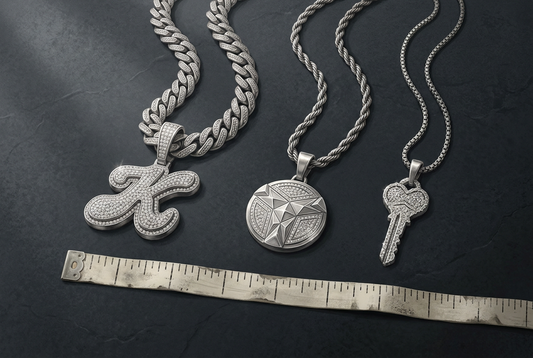
Instead of selecting several nearly identical pendants, decide what each design contributes. One might be a restrained everyday option, another a more graphic shape, and another a stronger statement. Those roles should be visible in dimensions and construction, not just in different product names.
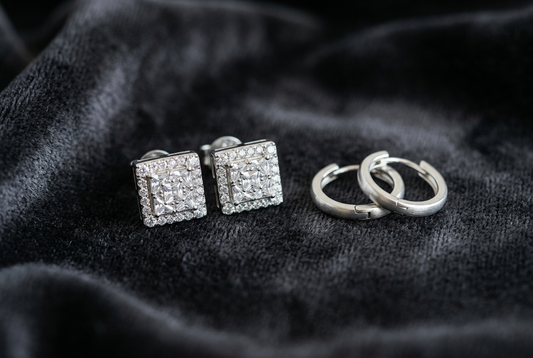
For chains, compare length, width and clasp information. For earrings, compare face size, fastening and whether the unit is a single or pair. For pendants, confirm the bail dimensions and whether a chain is included. These details help prevent accidental duplication within a small range.
Control the number of variations
Each extra size, finish or stone option creates another variation to explain and track. Ask whether the supplier's minimum quantity applies per design, per option or across the full order. A seemingly small selection can expand quickly when every variation has a separate requirement.
Choose variations for a reason. If two finishes address a clear customer preference, compare them. If you are adding several options only because the catalog makes it easy, pause and consider whether you have enough information to support them. A focused first assortment is a way to learn, not a promise about future demand.

Write the specification before comparing quotes
Record the stated base metal, surface finish, stone identities, dimensions and included components for each sample. Mark missing information as a question. Do not assume similar-looking pieces are equivalent because their main photographs share a style.
Ask about substitutions and how changes will be communicated before a repeat order. Keep the approved sample reference and written description together. A shared name such as iced out pendant does not define the construction precisely enough to resolve a later mismatch.
Use samples to test the assortment's logic
Compare samples side by side under consistent lighting. Look at whether the differences between designs are easy to explain. Check the reverse sides, edges and fastenings as well as the decorative fronts. Record observations rather than relying on memory after the samples are packed away.
Photograph each item in the same way and write a brief description from verified details. If two descriptions are almost identical and the visual differences are minor, ask whether both pieces need to be in the first order. If a product needs repeated clarification, improve the specification before increasing the quantity.
Include packaging and handling in the comparison
Ask how chains, posts and stone-set surfaces are protected in transit. Clarify whether packaging is included in the quotation and what alternatives cost. An assortment is not fully understood if the jewelry specification is clear but the delivered format is still uncertain.
Review the quoted shipping assumptions, payment terms and the process for reporting discrepancies before committing. Keep these agreements in writing. A low unit price alone cannot tell you whether the complete order is appropriate for your plans.

Expand from evidence, not catalog excitement
After the first assortment is in use, record the questions people ask and which specifications repeatedly need explanation. Use actual feedback and your own sales information to guide future choices rather than assuming a popular-looking catalog image predicts demand.
For style inspiration, you can explore jewelry at Lumingem while treating each product's published details individually. When researching wholesale hip hop jewelry, keep the buying decision focused: a clear customer, distinct product roles, verified specifications and a first assortment small enough to evaluate thoughtfully.
Tags:
Previous
Real Hip Hop Jewelry on a Budget: Materials, Stones and Value
Next
Affordable Hip Hop Earrings: A Single Stud or a Matching Pair?