
Lab Grown Emerald Jewelry: How to Read Product Photos Before You Buy
A beautiful jewelry photo can make you stop scrolling. It cannot tell you everything you need to know before ordering.
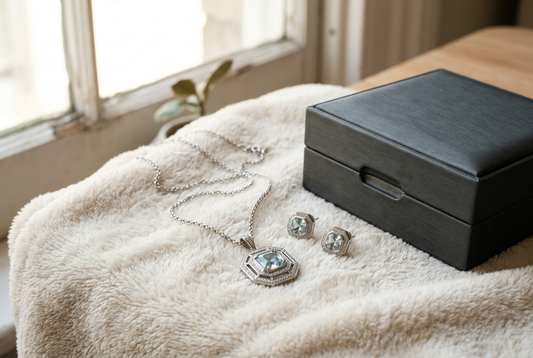
When you are shopping for Lab Grown Emerald Jewelry, use the images to understand the design, then use the product details to confirm the materials, measurements, and included components. That simple habit helps you choose a piece for how it will actually look and feel, not just how it appears in one close-up.
Here is how to make those product photos more useful.

Start With the Full Piece
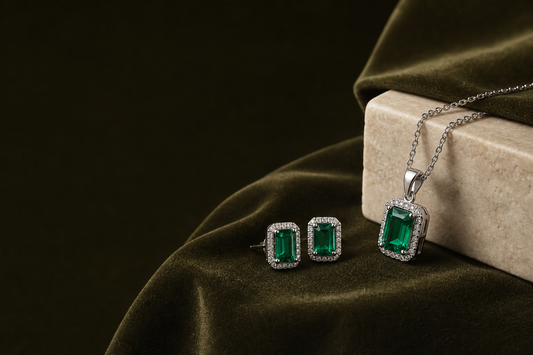
The first image usually gives you the strongest impression: the green color, the outline, and the overall style.
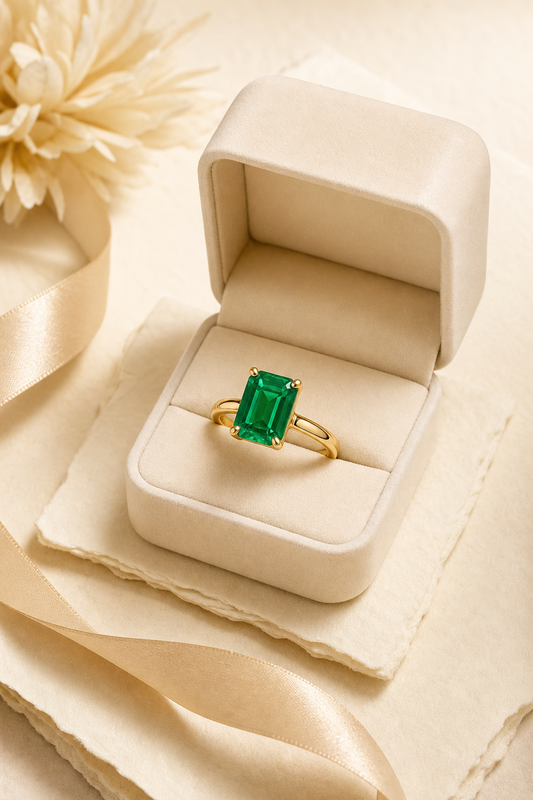
Before zooming in, look at the complete piece. Is the gemstone the main feature, or does the surrounding setting create most of the visual size? Does the pendant have a substantial frame? Is the ring band delicate compared with the top?
These questions help you separate the gemstone's dimensions from the dimensions of the whole design.
A close-up of Emerald Jewelry can make a small detail feel much larger than it will on your hand or neckline. That is why the written measurements matter as much as the photograph.
Use Side Views to Understand the Setting
Front-facing images show the design. Side views can help explain how it is built.
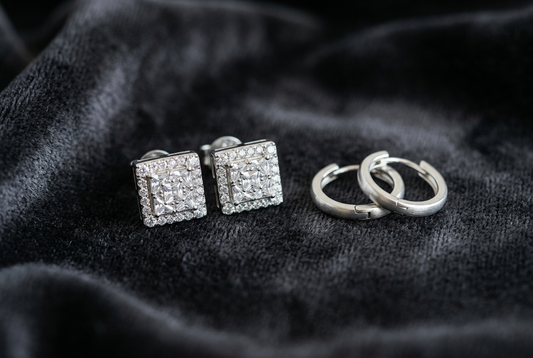
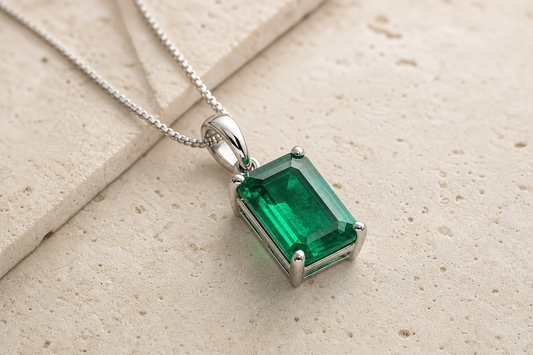
For a ring, look at how far the setting rises above the band. For earrings, check how much depth sits behind the front. For a pendant, look for information about the bail and how it connects to the chain.
Do not try to calculate exact dimensions from an image. Instead, use the side view to decide which questions you need answered.
If a setting looks raised, you might want to know its height. If a pendant has a narrow-looking bail, you should confirm compatibility before pairing it with a chain you already own.

Treat Wearing Photos as Context
A wearing photo is useful because it shows a piece in relation to a person. It is not a guarantee of how the jewelry will look on everyone.
Hand size, finger proportions, camera distance, clothing, and hairstyle can all change the impression.
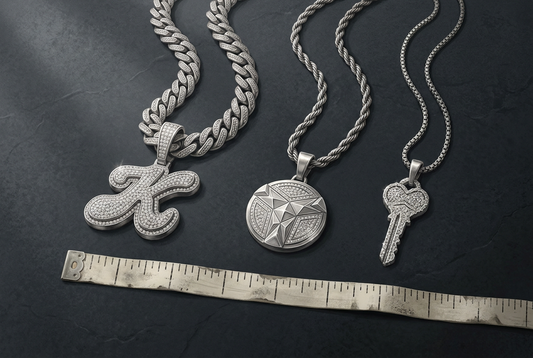
If you are considering a Lab Grown Emerald Ring, compare the listed top dimensions with a ring you already enjoy wearing. You can also cut a simple paper outline to help visualize the size.
For a necklace, consider where your preferred chain length sits with the neckline you actually wear. A styled image is a starting point, not a substitute for checking.
Read the Stone Description Separately
You may encounter phrases such as Lab Grown Emerald, Lab Created Emerald, and Synthetic Emerald while browsing.
Do not use the color in a photo to decide what the stone is. Read the seller's identification and any available information about origin, treatments, or documentation.
A photograph also cannot establish whether a stone is untreated or whether a piece has been independently assessed. Those details need to come from a clear description or supporting information.
Browse Lumingem's lab-grown emerald jewelry for different designs, then review the details of the individual piece you like.

Check What Comes With the Order
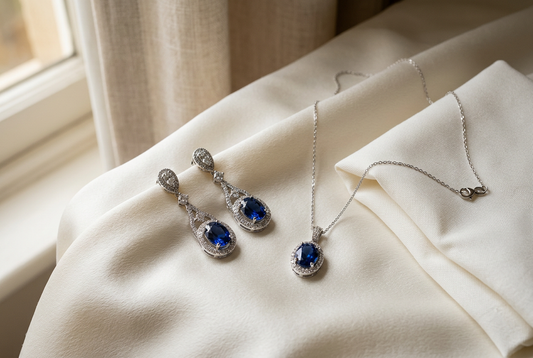
A pendant may be pictured on a chain without that chain being included. Earrings may appear beside other jewelry used only for styling.
Before ordering, confirm the selected variant and included components. Check whether measurements refer to one earring, the pendant alone, or the complete necklace.
If a detail is missing, ask. A short question before buying is much easier than discovering that the picture and your assumptions were not the same thing.
Common Questions
Can I judge gemstone color from one photograph?
Use multiple images when available, but remember that lighting, editing, and your screen affect appearance. Ask for clarification if the color is central to your decision.
Does a large close-up mean a large piece?
No. Check the listed measurements and compare them with something familiar.
What if the photos and description seem inconsistent?
Pause and ask the seller to explain. Do not choose whichever version you prefer and assume it is correct.
Buy With the Whole Picture
Good shopping is not about distrusting every image. It is about letting each part of the listing do its job.
Use photographs for design and proportion. Use measurements for size. Use the written description for materials and included components.
When those details make sense together, you can choose with a much clearer idea of what will arrive.
Tags:
Previous
Sapphire Bridal Jewelry That Still Feels Like You
Next
A Lab Grown Emerald Ring at Your Desk: Style and Comfort Tips