
How to Wear Emerald and Ruby Jewelry Together
Emerald and ruby jewelry can share an outfit without turning every detail into a matching set. The easiest starting point is one main green piece and a smaller red accent, or the reverse. Keep the clothing relatively quiet while you decide how much contrast you enjoy.

Choose a focal piece first
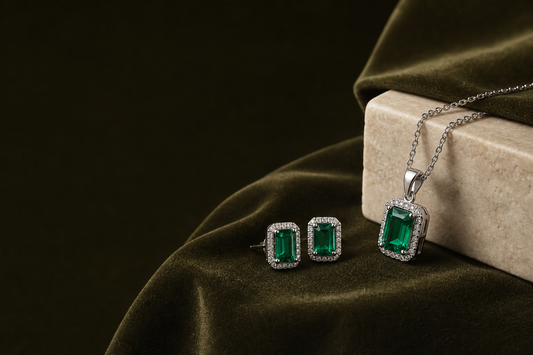
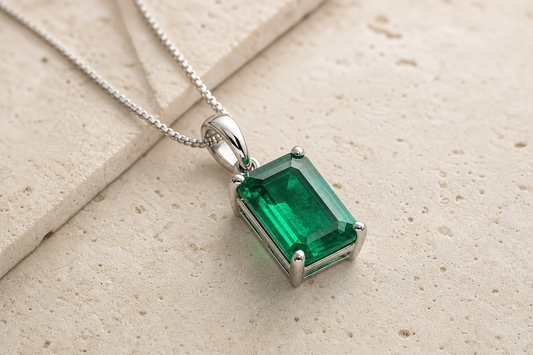
Begin with the jewelry you most want to wear. If that is a green pendant, let its position near the face make it the main feature. A smaller red bracelet can introduce the second color without placing two strong details at the neckline.
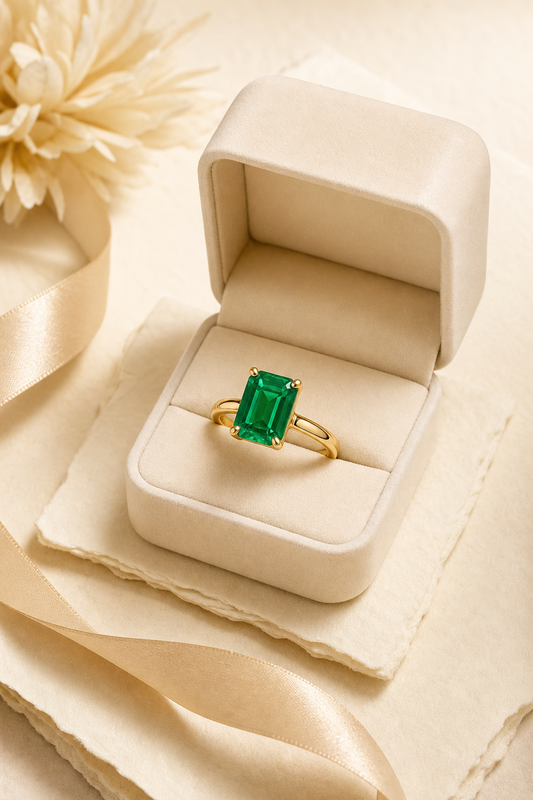
The opposite arrangement works too: ruby-colored earrings can lead while a restrained green ring provides a separate accent. These are outfit examples, not claims about which designs are currently stocked. Check individual listings for exact material identity and measurements.
Separate size from visual impact
A small bright accent may attract more attention than a larger, quieter stone. Evaluate the combination under ordinary lighting rather than judging only close-up product images. Consider the amount of colored surface visible, the surrounding setting, and where each piece sits.
If both pieces feel equally dominant, change one variable. Remove a necklace layer, choose smaller earrings, or simplify the sleeve near a bracelet. You do not need to replace the entire outfit.
Use clothing as a calm background
White, gray, black, and understated neutral fabrics are useful starting points because they leave fewer competing colors. They are not mandatory. A patterned outfit can work if the jewelry repeats one small detail instead of introducing another large pattern.
For an everyday look, try a white shirt, one green pendant, and a slim red bracelet. For a quieter evening combination, consider dark clothing with green studs and a red pendant. Keep the rest of the accessories simple until the two colors feel balanced.

Coordinate metals without assuming materials
A shared metal tone can connect two differently colored stones. However, similar-looking finishes do not prove identical metal content. Read each description separately for metal, plating, center-stone identity, and accents.
Mixed metal tones are also an option. Repeat one of those tones elsewhere if you want a visible connection, but avoid adding pieces purely to satisfy a rule. Comfort and the overall silhouette matter more than perfect symmetry.
Avoid accidental seasonal styling
Red and green may suggest holiday dressing, particularly when both are prominent and surrounded by festive accessories. For a less seasonal impression, reduce one color to a small accent and choose ordinary clothing rather than themed patterns.
You can also separate the colors physically: earrings and a ring, or a necklace and bracelet, rather than two neighboring pendants. This gives each piece room and makes the pairing feel less like a uniform set.

Check practical details
Make sure a bracelet does not repeatedly knock against a watch or catch on a cuff. Leave room around a necklace so another chain does not rub against its setting. Store the pieces separately and follow their individual care instructions; matching colors do not imply matching cleaning requirements.
For a more focused green-jewelry outfit, see our emerald necklace and collared shirt guide. For wrist styling, see wearing a ruby bracelet with a watch.
Frequently asked questions
Must red and green jewelry match in size?
No. Different sizes can create a clearer focal point.
Can I wear this pairing outside the holidays?
Yes. Keep one color smaller and choose ordinary wardrobe pieces rather than seasonal accessories.
Do all pieces need the same metal?
No. A repeated tone can help, but mixed tones can be intentional too.
Choose the piece you love first, add a smaller contrasting accent, and judge the result as a complete outfit. Explore Lumingem and confirm the materials and dimensions on each product page before ordering.
By Lumingem Editorial Team.
Tags:
Previous
How to Wear a Blue Sapphire Necklace With a Turtleneck
Next
Padparadscha Earrings With Long Hair: Studs or Short Drops?